The 1857 Revolt as Depicted in Colonial Indian Novels
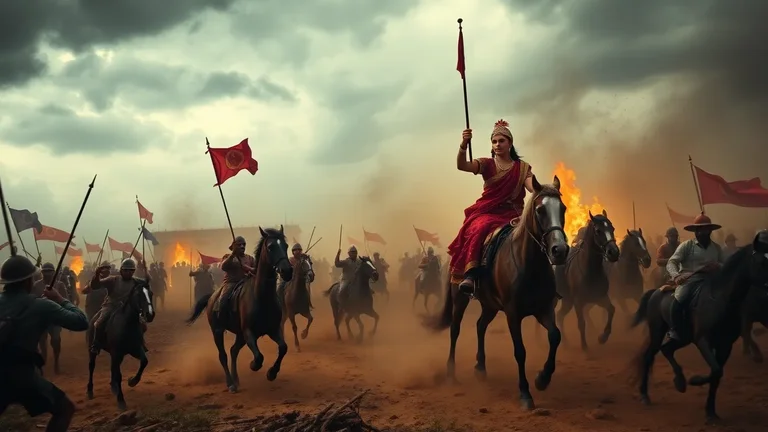
The 1857 Revolt, often called the First War of Independence, stands as a pivotal event in colonial India's history, and its portrayal in novels captures the raw intensity of rebellion against British rule. This uprising began with sepoy mutinies in Meerut on May 10, 1857, spreading rapidly to Delhi, Kanpur, Lucknow, and beyond. Novels weave these events into sagas of heroism, betrayal, and cultural clash. Writers like M.M. Kaye in 'The Far Pavilions' present the revolt through a British lens, showing the chaos from an imperial viewpoint, where sepoys fire upon officers amid rumors of greased cartridges offending Hindu and Muslim soldiers alike. Indian authors counter this with narratives of unity; for instance, in Vrindavan Lal Verma's 'Jhansi Ki Rani', Lakshmibai emerges as a fierce warrior queen, leading charges on horseback, her sword flashing in the dust of Jhansi fort. These sagas detail the siege of Delhi, where Bahadur Shah Zafar reluctantly became a symbolic leader, poets reciting verses amid cannon fire. The brutality unfolds in pages describing the Bibighar Massacre at Kanpur, where Nana Sahib's forces retaliated against British women and children, prompting savage reprisals by General Havelock. Such depictions highlight the revolt's fragmented nature—no unified command, yet a spark for future nationalism. Extensive accounts in novels explore economic grievances: heavy land taxes under the Doctrine of Lapse annexing princely states like Awadh, fueling princely involvement. Saga after saga delves into personal stories, like a sepoy's internal conflict over loyalty to the East India Company versus dharma. British novels often romanticize the defense of Lucknow Residency, with women like Julia Inglis tending wounded under siege for 87 days. Indian literature reframes this as colonial arrogance, emphasizing rebel resilience. These narratives span generations, showing how 1857 sowed seeds of swaraj, with characters pondering the rani's last stand at Gwalior, cut down by British lancers.
Delving deeper, novels dissect the revolt's ideological underpinnings. In K.A. Abbas's 'The Last Mughal', archival details recreate Zafar's court, where Sufi saints and ulema debated jihad versus accommodation. The siege of Lucknow features prominently, with Henry Lawrence's death marking early British setbacks, rebels tunneling under walls. Sagas portray the role of women—Begum Hazrat Mahal organizing defenses in Awadh, her letters to Queen Victoria demanding justice. Economic analyses in fiction reveal ryots joining rebels over indigo plantations' exploitation. Comparative studies in novels contrast Mangal Pandey's spark in Barrackpore with Rani Lakshmibai's tactical genius, her adoption of Damodar Rao challenging Dalhousie’s policies. Post-revolt reprisals fill chapters: mass executions by blowing from guns, villages razed. These elements build epic sagas, blending history with fiction to humanize statistics—over 100,000 Indian deaths versus 6,000 British. Authors use dialect-rich dialogues, sepoys shouting 'Chalo Delhi!' as they march. Visual imagery abounds: red-coated soldiers clashing with turbaned warriors under monsoon rains. Such depth ensures novels preserve oral histories lost to official records.
- Key motifs in 1857 novels: Religious syncretism, as Hindus and Muslims shared chapatis signaling revolt.
- Symbolism of the lotus and banyan tree in rebel flags, representing native sovereignty.
- Betrayal narratives, like some princes aiding British for thrones.
- Romantic subplots amid war, soldiers wooing local women.
- Prophetic dreams foretelling British downfall, drawing from folklore.
Expanding on these, novels often include maps sketched in appendices, tracing rebel advances from Bihar to Punjab. Character arcs trace evolution from loyal subjects to revolutionaries, influenced by wandering fakirs spreading discontent. The revolt's suppression led to the Government of India Act 1858, ending Company rule— a turning point sagas foreshadow with prophetic dialogues.
Tribal Uprisings and Their Saga in Literature
Tribal revolts against colonial encroachment form another rich vein in novel sagas, showcasing indigenous resistance in forested heartlands. The Santhal Hul of 1855 preceded 1857, with Sidhu and Kanhu Murmu leading 10,000 Santhals against zamindars and moneylenders in Bengal Presidency. Novels like Mahasweta Devi's 'Aranyer Adhikar' portray this as ecological warfare, British revenue systems stripping forests for railways. Santhals, armed with bows and axes, declared guillotine independence at Bhognadih, clashing in mud-soaked fields. Literature amplifies voices of adivasi women, like Phulo and Jhano, rallying tribes with songs of Birsa Munda's later legacy. The Munda Rebellion of 1899-1900, Ulgulan or Great Tumult, features in sagas as messianic uprising; Birsa proclaimed himself prophet, abolishing taxes, his followers destroying church symbols. Captured and dying in Ranchi jail, his story inspires novels blending myth with fact—khuntkatti land rights central grievance against outsider jagirdars.
Bastar Rebellion of 1910 sees Gunda Dhur leading Maria and Muria tribes against forest reservations limiting shifting cultivation. Sagas depict midnight raids on police outposts, arrows whittling British patrols. Rampa Rebellion in 1922-24, led by Alluri Sitarama Raju, fuses tribal lore with Gandhian non-violence twisted into guerrilla war; novels recount his capture by betrayal, execution by machine-gun. These narratives detail colonial responses: martial law, Flying Columns scorching villages. Economic drivers—timber contracts, mining leases—frame conflicts, tribes viewing forests as sacred. Authors incorporate oral epics, gondu songs echoing in prose. Comparative analyses show parallels: all revolts crushed yet inspiring Congress tribal policies later.
| Uprising | Date | Leader | Key Grievance | Notable Novel/Saga |
|---|---|---|---|---|
| Santhal Hul | 1855 | Sidhu & Kanhu Murmu | Land alienation | Aranyer Adhikar by Mahasweta Devi |
| Munda Ulgulan | 1899-1900 | Birsa Munda | Khuntkatti rights | Birsa Munda folklore integrations |
| Bastar | 1910 | Gunda Dhur | Forest laws | Historical fictions by local writers |
| Rampa | 1922-24 | Alluri Sitarama Raju | Tribal autonomy | Alluri-centric Telugu novels |
This table summarizes core tribal uprisings, each immortalized in sagas emphasizing cultural erasure threats. Post-revolt, novels explore survivals: Munda hymns persisting, Santhal dances in festivals. Detailed battle recreations include tactics—ambushes in ravines, poison arrows. Personal vignettes: a Munda convert questioning faith under Birsa's gaze. These stories underscore how tribal revolts, though localized, contributed to pan-Indian discourse on self-rule.
Peasant Revolts in the Bengal Countryside
Peasant uprisings dot Bengal's colonial narrative, vividly captured in novels chronicling indigo and zamindari oppressions. The Indigo Revolt of 1859-60 saw ryots in Nadia and Jessore refuse cultivation, burning factories after petitions failed. Dinabandhu Mitra's play 'Nil Darpan', novelized in adaptations, exposes planter tyranny—forced loans, contract cheating. Sagas depict night marches, planters fleeing to Calcutta. Pabna Revolt 1873-76 targeted mahajans' rents post-Permanent Settlement hikes; ryots formed unions, withholding payments, courts initially sympathetic. Literature portrays leaders like Ishan Chandra Roy navigating legal battles amid arson. Champaran Satyagraha 1917 marks Gandhi's entry, novels detailing his walks through muzaffarpur, exposing tinkathia system binding tenants to indigo. Rajendra Prasad's memoirs inspire fictions of blue-dyed fingers symbolizing bondage.
Deccan Riots 1875 in Maharashtra see Maratha and Kunbi peasants attacking moneylenders' records after Deccan Agriculturists Relief Act delays. Sagas recount looting godowns, British cavalry charges. Bardoli Satyagraha 1928, Vallabhbhai Patel's no-tax campaign against 30% hike, features in novels as disciplined non-violence triumph—revenue slashed 80%. Women like Maniben Patel organize grain banks. These revolts' sagas interlink caste dynamics: lower castes allying against upper zamindars. Economic stats enrich prose: Bengal famine 1770 killing third population, setting revolt stage. Dialogues capture desperation: 'Brahma babu, your rents devour us!' Novels forecast independence, peasants as foot soldiers.
Swadeshi and Non-Cooperation in Nationalist Sagas
Partition of Bengal 1905 ignited Swadeshi Movement, boycotts and bonfires of foreign cloth filling novel pages. Tagore's 'Gora' explores through Binoy and Gora debating extremism versus moderation, rakhi-binding symbolizing unity. Sagas depict Dacca University protests, bomb attempts by Anushilan Samiti. Non-Cooperation 1920-22 expands this: Khilafat alliance, charkha spinning. Nehru's 'Discovery of India' inspires fictions of village hartals, Prince of Wales boycott 1921 riots. Chauri Chaura 1922 violence—22 policemen burned—prompts Gandhi's halt, sagas pondering moral dilemmas. Literature details underground networks smuggling swadeshi salt.
These movements' novels emphasize cultural revival: raksha bandhan processions, Vande Mataram anthems. Economic boycotts hit Manchester textiles, Liverpool docks idle. Personal transformations abound: English-suited youth donning khadi. Comparisons with Irish Sinn Fein add global layers. Sagas critique elitism, peasants slow to join initially.
- Swadeshi tactics in novels: Bonfire scenes with patriotic songs.
- Role of students forming samitis.
- Women's participation in picketing.
- Press censorship evasions via samizdat.
- Shift to extremism post-Kanpur Mosque 1913.
Quit India and Revolutionary Waves in Fiction
Quit India 1942 'Do or Die' call unleashes mass uprisings, novels capturing parallel governments in Ballia, Satara. Underground leaders like Jayaprakash Narayan evade hunts. Sagas detail Bombay sessions arrests, underground radio broadcasts. Revolutionary novels spotlight Bhagat Singh's HSRA bombings, Kakori Train robbery 1925—Ram Prasad Bismil's poetry recited pre-hanging. Chandrashekhar Azad's Jallianwala Bagh vow fuels legends. Literature recreates Lahore Conspiracy Case trials, hunger strikes. Women revolutionaries like Pritilata Waddedar storm Chittagong armory.
These sagas interweave INA trials post-WWII, Subhas Bose's 'Delhi Chalo'. Economic wartime inflation sparks strikes. Battle scenes: freedom army mock drills. Themes of sacrifice dominate—ghungroo bells on Azad's feet silencing trackers.
| Movement | Year | Key Event | Literary Impact |
|---|---|---|---|
| Quit India | 1942 | Parallel govts | Mass uprising sagas |
| HSRA Actions | 1920s | Kakori Robbery | Heroic biographies |
| INA | 1945 | Red Fort Trials | Bose-centric epics |
Literary Masters and Their Uprising Narratives
Authors shape these sagas uniquely. Bankim Chandra Chatterjee's 'Anandamath' mythologizes Sannyasi Rebellion 1770s, 'Bande Mataram' hymn fueling Swadeshi. Premchand's 'Rangbhoomi' portrays blind beggar Surdas against factory encroachment, echoing peasant woes. Bhisham Sahni's 'Tamas' fictionalizes Partition riots as 1947 uprising coda. English novels like Paul Scott's 'Jewel in the Crown' Quartet dissect 1857 through British-Indian eyes, rape motif symbolizing conquest.
Regional voices: Telugu novels on Alluri, Tamil on Vellore Mutiny 1806. Women writers like Krishna Sobti in 'Mitro Marajani' touch revolt undercurrents. These masters employ stream-of-consciousness for inner turmoil, historical footnotes for accuracy.
Themes of Sacrifice, Unity, and Betrayal
Core themes recur: sacrifice in martyrdoms, unity across faiths—1857 Hindus tying rakhi to Muslims. Betrayal by mir jafars recurs. Identity quests dominate, colonized rediscovering roots. Ecological motifs in tribal sagas, land as mother. Gender roles evolve, from veiled to vanguard.
Postcolonial critiques analyze orientalism in British novels versus subaltern voices in Indian ones. Psychological depths: trauma of defeat birthing resilience.
Legacy in Contemporary Sagas and Adaptations
Modern novels revisit uprisings: Amitav Ghosh's 'Sea of Poppies' links 1857 to opium wars. Graphic novels visualize battles. Films from sagas like 'Mangal Pandey' extend reach. Global diaspora literature explores inherited memories. Educational impact: novels supplement textbooks, fostering pride. Future sagas may blend VR histories.
These legacies affirm uprisings' enduring narrative power, from sepoy grease to Quit India cries, etched in ink forever. The 1857 Revolt is portrayed in novels as the first major anti-colonial uprising, symbolizing unity between Hindus and Muslims, with figures like Rani Lakshmibai as heroes, contrasting British accounts of mutiny. Tribal sagas emphasize ecological and cultural resistance, leaders like Birsa Munda as messiahs fighting land alienation, blending folklore with historical battles against forest laws. Tagore's 'Gora' and others show boycotts, bonfires, and cultural revival post-Bengal Partition, highlighting student activism and shift to nationalism. Common themes include sacrifice, religious unity, betrayal, identity reclamation, and women's roles, from peasant indigo revolts to Quit India parallel governments. Contemporary novels and adaptations like Ghosh's works revisit uprisings, influencing films, graphics, and global diaspora stories on colonial resistance.FAQ - Colonial India's Uprisings in Novel Sagas
What was the significance of the 1857 Revolt in Indian novels?
How do novels depict tribal uprisings like the Munda Rebellion?
Which novels cover the Swadeshi Movement?
What themes dominate these literary sagas?
How has the legacy influenced modern literature?
Colonial India's uprisings, from the 1857 Revolt to Quit India, are vividly captured in novel sagas like 'Jhansi Ki Rani' and 'Anandamath', portraying leaders such as Rani Lakshmibai and Birsa Munda in epic struggles against British rule, highlighting themes of unity, sacrifice, and cultural resistance.
Colonial India's uprisings, immortalized in novel sagas, transform historical pain into enduring tales of defiance, reminding readers of the human cost and triumphs that paved the path to independence.