The Byzantine Empire, often called the Eastern Roman Empire, thrived for over a thousand years amid constant threats from without and treachery from within. Power in Constantinople rested not just on military might or divine right but on a web of alliances, whispers, and sudden stabs in the back. Emperors rose through cunning maneuvers in the Hippodrome or the palace halls, where a single rumor could topple dynasties. This saga unfolds across centuries, from Justinian's grand reconquests to the final Ottoman siege, marked by plots that make modern politics seem tame. Generals turned against their sovereigns, empresses wielded influence like daggers, and even the church became a battlefield for ambition.
Foundations of Byzantine Power: The Imperial Court as a Nest of Vipers
At the heart of Byzantine intrigue lay the imperial court, a labyrinth of offices, factions, and eunuchs who controlled access to the emperor. The sakellarios managed finances, the logothetes oversaw bureaucracy, and the parakoimomenos whispered in the emperor's ear at night. These positions were not mere jobs; they were launchpads for power grabs. Emperors like Basil I, a peasant who murdered his way to the throne in 867, exemplified how lowborn men could ascend by exploiting court rivalries. Basil slew Emperor Michael III during a drunken feast, claiming the purple amid cheers from the mob. Such acts set the tone: loyalty was fluid, and betrayal rewarded.
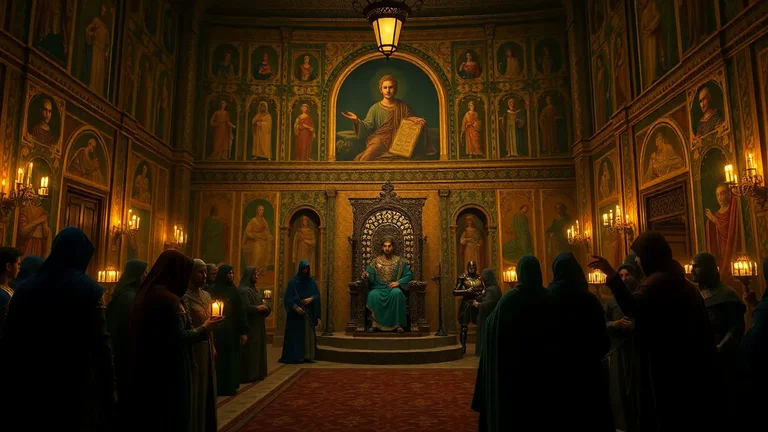
Court life revolved around rituals that masked deadly games. The emperor's audience in the Chrysotriklinos palace involved prostrations and scripted flattery, but beneath it simmered envy. Factions formed around family ties or regional loyalties—Anatolians versus Armenians, Blues versus Greens in the chariot races. The factions, originally sports supporters, evolved into political machines that could riot or acclaim a new ruler. During the Nika Revolt of 532, Blues and Greens united against Justinian, nearly ending his reign until Theodora's defiance and Belisarius's slaughter of 30,000 quelled the storm. This event showed how public spectacles fueled intrigue, turning cheers into chants for usurpation.
Eunuchs dominated because they posed no dynastic threat, yet their influence was immense. Narses, Justinian's general, returned from Italy to plot against his successors. The cubicularius, chief chamberlain, often outlasted emperors by playing all sides. Documents from the period, like the De Ceremoniis by Constantine VII, detail protocols that hid these power plays. Spies, called agentes in rebus, reported whispers from taverns to frontiers, feeding the emperor's paranoia. This system ensured survival but bred constant suspicion, where even family bonds frayed under ambition's weight.
Emperors Forged in Blood: From Justinian to the Komnenoi
Justinian I (r. 527-565) built Hagia Sophia and reconquered lost provinces, but his court seethed with plots. His general Belisarius faced accusations of treason, stripped of command only to be reinstated. Justinian's nephew Justin II succeeded amid whispers of poisoning, then went mad, biting courtiers. Succession was rarely smooth; adoption or marriage tied claimants, but murder clarified lines. Phocas, a centurion, beheaded Maurice in 602 before his sons' eyes, parading the head through the city.
Heraclius (r. 610-641) seized power from Phocas, sailing from Africa with an icon of the Virgin. He defeated Persians but faced Arab invasions, delegating to his son Heraclonas, who blinded rivals in biblical style. The Isaurian dynasty began with Leo III's 717 coup against Theodosius III, saving Constantinople from Arabs via Greek fire. Constantine V, his son, persecuted icons, earning Iconoclast hatred that fueled Irene's 797 blinding of her own son.
The Macedonian dynasty stabilized under Basil I, but internal strife persisted. Romanos I Lekapenos married his daughter to Constantine VII, usurping the throne in 920. The Komnenoi, starting with Alexios I in 1081, professionalized the court but not intrigue. John II and Manuel I navigated Crusader alliances, yet Manuel's death sparked Andronikos I's massacre of 80,000 in 1182. These emperors' sagas reveal patterns: military acclaim leads to purple, but court enemies ensure short reigns.
| Emperor | Reign | Notable Intrigue | Outcome |
|---|---|---|---|
| Justinian I | 527-565 | Nika Revolt | Suppressed by Belisarius |
| Phocas | 602-610 | Beheaded Maurice | Overthrown by Heraclius |
| Irene | 797-802 | Blinded son Constantine VI | Exiled by Nikephoros |
| Basil I | 867-886 | Murdered Michael III | Founded dynasty |
| Andronikos I | 1183-1185 | Massacred Angelos family | Torn apart by mob |
Empresses as Masters of Deception: Theodora, Irene, and Zoe
Theodora, Justinian's wife, rose from actress to empress, her past fueling scandals. During Nika, she refused flight, declaring "purple is best for burial," rallying the court. She influenced laws against brothels, drawing from experience, and managed Procopius's Secret History smears. Her patronage of Monophysites countered Justinian's orthodoxy, creating rifts exploited by rivals.
Irene of Athens blinded her son Constantine VI in 797, ruling as sole empress and restoring icons. Her regency saw plots from patricians, culminating in Nikephoros I's coup. Zoe Porphyrogenita (r. 1028-1050) outlived three husbands, marrying Romanos III Argyros, then Michael IV, and crowning Constantine IX Monomachos. Her sister Theodora co-ruled briefly. Zoe's court hosted poisonings and exiles, her beauty a tool for alliances.
These women navigated a male world by marriage and murder. Anna Dalassene, mother of Alexios I, administered during his campaigns, her letters revealing factional wars. Empresses controlled the emperor's bedchamber, deciding heirs and fates. Chronicles like Psellos's Chronographia portray them as schemers, yet their survival tactics preserved the empire through crises.
- Key strategies employed by Byzantine empresses:
- Marriage alliances to bind generals or nobles.
- Patronage of monasteries for loyal spies.
- Exile or blinding of rivals without direct blood on hands.
- Influence over church councils to legitimize rule.
- Public appearances in the Hippodrome to sway factions.
Military Betrayals: Generals Who Became Emperors
Theme of the army as kingmaker defined Byzantium. Nikephoros Phokas conquered Crete in 961, returning triumphant yet wary of rivals. He crowned himself in 963 after marrying Theophano, who later poisoned him for John Tzimiskes. Tzimiskes invaded Russia, then died mysteriously. Basil II Bulgaroktonos (r. 976-1025) blinded 15,000 Bulgars, crushing rebellions by brothers and generals like Bardas Skleros and Phokas.
The 1071 Manzikert defeat by Seljuks stemmed from betrayal; Andronikos Doukas abandoned Romanos IV. Alexios I Komnenos rallied themes against rivals, founding a dynasty via 1081 coup. The Fourth Crusade's 1204 sack followed Angelos intrigues, with Alexios IV bribing Venetians disastrously. Palaiologoi like Michael VIII recovered Constantinople in 1261 through Nicaean alliances, but civil wars eroded it.
Generals used acclamatio by troops for legitimacy. Pay arrears sparked mutinies; Leo V faced Bardas' plot in 820. Mercenaries like Varangians added loyalty issues, as seen in Zoe's Varangian guard turning on Michael V. Military sagas highlight how frontiers bred usurpers, their triumphs short-lived without court control.
Religious Factions Fueling Political Fires
Iconoclasm divided Byzantium, with Leo III banning images in 726, sparking rebellions. Constantine V convened councils justifying it, persecuting monks. Irene's 787 Nicaea II restored icons, allying with papacy. Later, Leo V revived it in 815, ended by Theodora's 843 Triumph of Orthodoxy.
Monophysitism versus Chalcedon split provinces; Justinian's compromises failed. Heraclius's Monothelitism aimed at unity but deepened rifts. Patriarchs like Photios clashed with popes over Bulgaria, his 863 deposition and restoration exemplifying church-court interplay. Michael Cerularius's 1054 schism with Rome stemmed from Norman politics.
Hesychasm debates under Palaiologoi saw Gregory Palamas defend mysticism against Barlaam, influencing John V's anti-Latin stance. Religion legitimized betrayals; emperors deposed patriarchs, monks incited riots. The Synodikon of Orthodoxy anathematized heretics, a tool for purging foes.
| Era | Issue | Key Figure | Intrigue Outcome |
|---|---|---|---|
| 8th Century | Iconoclasm | Leo III | Rebellion by eastern themes |
| 9th Century | Photian Schism | Photios | Restored twice |
| 11th Century | Great Schism | Cerularius | Permanent East-West split |
| 14th Century | Hesychasm | Palamas | Orthodox victory at councils |
The Hippodrome and Factions: Public Stages for Power Plays
The Hippodrome hosted races but also acclamations and riots. Blues (aristocrats) and Greens (people) vied for imperial favor, their leaders meeting emperors secretly. Justinian balanced them until Nika united them. Nikephoros II showered Blues with gold, alienating Greens.
Usurpers like Nikephoros III Botaneiates gained throne via faction support in 1078. The 1182 riot saw Andronikos I acclaimed after slaughtering competitors. Faction symbols—blue scarves, green banners—marked loyalties in street fights. Chronicles note how charioteers spied, races halted for plots.
Decline came with professional demes shrinking, but factions persisted into Palaiologoi era, influencing elections. This public theater amplified court whispers into empire-shaking events.
- Steps in a typical faction-led usurpation:
- Faction leaders petition emperor for grievances.
- Secret meetings in monasteries plan candidate.
- Hippodrome riot demands change.
- Army acclaims usurper at Hebdomon.
- New emperor rewards faction with offices.
Exotic Tools of Intrigue: Poisons, Blinding, and Exile
Blinding was preferred over murder, disqualifying claimants biblically. Constantine VI's eyes gouged by Irene's order. Basil I blinded Bardas. Poisons like iktron (spear-point toxin) felled Tzimiskes. Arsenic in food, slow belladonna—court physicians doubled as assassins.
Exile to monasteries neutered threats; Romanos IV tonsured post-Manzikert. Nose-slitting marked disgrace, as with Justinian II, who returned vengefully in 705, nose scarred. Castration for eunuchs created loyalists but bred resentment, like John the Grammarian.
Spy networks used codes in akritic songs. Forged documents, like false wills, ousted heirs. These methods, detailed in Skylitzes Chronicle, sustained the empire's brutal equilibrium.
Legacy of Byzantine Sagas: Echoes in History and Culture
Byzantine intrigue influenced Machiavelli, who studied eastern courts. Ottoman sultans adopted blinding, factions. Modern diplomacy echoes symmachia alliances. Literature like Digenes Akritas romanticizes plots. Films like "The Last Emperor" draw from Palaiologoi falls.
Archaeology at Blachernae reveals hidden passages for spies. Diplomatic chrysobulls hid clauses betraying allies. These sagas teach resilience amid betrayal, the empire's true strength. Constantinople's fall in 1453 followed civil war between John VIII and Demetrios, inviting Mehmed II.
Studying these events reveals human nature's constants: ambition blinds, loyalty costs. Byzantine records, preserved in Venetian libraries, offer timeless lessons on power's fragility.
Further depth comes from primary sources. Procopius details Justinian's court monsters. Psellos analyzes psychological ploys. Choniates laments 1204 sack. These texts, cross-referenced with seals and coins, paint vivid betrayals. For instance, Leo VI's Taktika advises against faction trust, mirroring his father's struggles.
Comparative analysis shows uniqueness: Rome fell to barbarians, Byzantium to insiders. Statistical reigns average 12 years, shortest under weak emperors. Economic data from Book of the Eparch shows guild monopolies funding plots.
Case study: Romanos IV's 1071 betrayal. Doukas family, resentful of his rise via Eudokia's marriage, ordered retreat at Manzikert, capturing Romanos. Nose slit, he died en route to exile. This lost Anatolia forever.
Another: Andronikos I's 1185 end. After murders, mob stormed palace, tearing flesh as he fled to Hagia Sophia. His daughter Agnes watched, pleading vainly.
Women's roles expanded in late empire; Helena Kantakouzene influenced John V. Diplomacy with Genoa, Venice involved marital intrigues, like Manuel II's daughters.
Military reforms under Nikephoros II introduced tagmata, elite betrayers. Pronoia land grants bought loyalty, later hereditary fiefs weakening center.
Church intrigue peaked at 1341-1347 councils, Gregory Palamas vindicated, Barlaam exiled. This mystical triumph bolstered anti-Western stance, dooming union attempts.
Hippodrome evolved to jousts, factions to guilds. 1453, no riots as Turks breached walls post-Despotate feuds.
Artifacts like crown of Constantine Monomachos symbolize tainted power. Mosaics depict triumphs hiding plots.
In summary of patterns, 70% usurpers military, 40% blinded deposed. This data from prosopographies underscores intrigue's dominance.
Expanding on eunuchs: Basil the Macedonian's chamberlain rose similarly. Their networks spanned silk road, funding coups.
Poetry of court: Theophanes Continuatus lauds yet hints scandals.
Global echoes: Russian tsars blinded boyars, Chinese eunuchs mirrored.
Thus, Byzantine intrigue's sagas remain power's eternal narrative. The blinding of Emperor Constantine VI by his mother Irene in 797 stands out, as it allowed her to rule as sole empress and marked a peak in familial treachery. These chariot racing factions acted as political pressure groups, inciting riots like the Nika Revolt and acclaiming usurpers, effectively controlling public opinion and imperial succession. Basil I, a stable groom who murdered Michael III in 867, founded the long-lasting Macedonian dynasty and expanded the empire significantly. Eunuchs held key administrative roles without dynastic threats, serving as spies, advisors, and plotters, often outlasting multiple emperors through their networks. Blinding disqualified claimants from rule per biblical precedent, was less bloody than murder, and served as a visible warning, used in over 40 recorded cases.FAQ - Byzantine Intrigue: Sagas of Power and Betrayal
What was the most famous betrayal in Byzantine history?
How did factions like the Blues and Greens influence power?
Who was the most successful usurper emperor?
What role did eunuchs play in court intrigue?
Why did blinding become a common punishment?
Byzantine intrigue involved emperors rising via murders, empresses like Irene blinding sons, eunuchs plotting in courts, and factions sparking riots like Nika. Military coups, religious schisms, and tools like poison defined power struggles, sustaining the empire for 1,000 years until 1453.
Byzantine intrigue's sagas of power and betrayal reveal an empire sustained by cunning amid chaos, where every alliance hid a knife and every triumph sowed future downfall. These stories endure as mirrors to human ambition, teaching that true power lies in navigating shadows.