Origins of Caribbean Pirate Legends
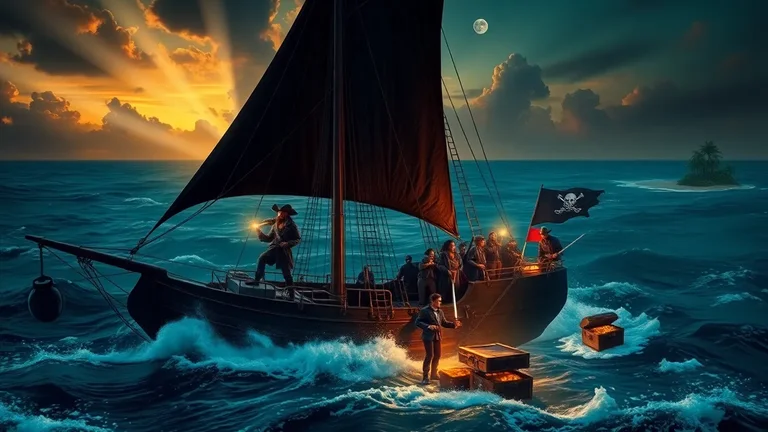
The Caribbean Sea, with its turquoise waters and scattered islands, served as the perfect stage for pirate activities during the Golden Age of Piracy from the 1650s to the 1730s. Legends began forming around real figures who challenged colonial powers like Spain, England, and France. These stories spread through sailors' tales, tavern songs, and early printed broadsides, blending fact with exaggeration to create dramatic narratives. For instance, the capture of Spanish treasure fleets by pirates fueled myths of buried gold and cursed treasures, elements that later dominated dramatic retellings. Historians note that ports like Nassau in the Bahamas and Port Royal in Jamaica were hubs where these legends took root, with earthquakes and hurricanes adding supernatural twists to the lore. In dramas, this origin story often opens with stormy seas and shadowy figures on horizon lines, setting a tone of adventure laced with peril. Detailed accounts from contemporary sources, such as Captain Charles Johnson's 'A General History of the Pyrates' published in 1724, provide the backbone for these tales, describing brutal raids and daring escapes that playwrights and filmmakers have amplified for tension.
Explorers and privateers blurred lines with outright piracy, contributing to the legend's complexity. Sir Henry Morgan, a Welsh privateer who sacked Panama in 1671, transitioned from hero to villain in Spanish eyes, his exploits detailed in trial records and maps. Dramas portray him with a mix of charisma and ruthlessness, often in monologues reflecting on fortune's wheel. The economic backdrop of mercantilism, where sugar plantations drove slave trade and wealth accumulation, contextualizes pirate motivations beyond greed—some saw themselves as rebels against empire. Archaeological finds, like shipwrecks off the Turks and Caicos, yield cannons and gold coins that verify these stories, inspiring dramatic props and sets. Over centuries, oral traditions in island cultures added voodoo elements and ghost ships, enriching the dramatic palette with mysticism that contrasts rational piracy.
Transitioning from history to stage, early 18th-century plays like 'The Successful Pyrate' by Charles Johnson captured public fascination, using pirate legends to critique society. These works featured soliloquies on freedom versus law, mirroring real pirates' articles of governance that promised democratic shares of loot. In modern analysis, scholars like Marcus Rediker in 'Villains of All Nations' argue pirates embodied proto-socialism, a theme echoed in dramas where crews vote on captains. This depth allows for character-driven plots, exploring loyalty amid betrayal, far beyond simple swashbuckling.
Iconic Pirates and Their Dramatic Personas
Edward Teach, better known as Blackbeard, stands as the archetype of the fearsome pirate in Caribbean lore. His blockade of Charleston in 1718, with fuses burning in his beard, became legend through eyewitness reports, later dramatized in scenes of psychological terror rather than mere combat. Films depict him with towering presence, slow fuses smoking to build dread, drawing from descriptions in Johnson's book where he orchestrated fear like a theater director. Anne Bonny and Mary Read, female pirates captured in 1720, add gender defiance to dramas; their trial transcripts reveal bold defenses, inspiring cross-dressing disguises and romantic subplots in plays.
Calico Jack Rackham's sloop, the Revenge, haunts tales of lazy leadership ending in capture, his relationship with Bonny providing romantic drama. Dramatists expand this into triangles of jealousy and mutiny, using dialogue to humanize through regrets. Henry Avery, who vanished with millions after 1695, fuels treasure hunt narratives, his fate speculated in lost maps and coded letters that appear as plot devices. Bartholomew Roberts, the record-holding pirate with over 400 prizes, brings discipline to the chaos—his black flag with death imagery dramatized in choreographed sea battles.
Lesser-known figures like Stede Bonnet, the 'Gentleman Pirate,' offer comedic relief in dramas, his failed venture from Barbados wealth to piracy explored through ironic monologues. Sam Bellamy, the 'Prince of Pirates,' espoused equality, his wreck the Whydah yielding artifacts that authenticate his democratic code, often recited verbatim in scripts. These personas vary in morality, allowing dramas to probe themes of ambition, with pirates as flawed anti-heroes.
| Pirate | Real Exploit | Dramatic Trait | Notable Portrayal |
|---|---|---|---|
| Blackbeard | Charleston Blockade | Fear-Inducing Spectacle | Films with prosthetic beard |
| Anne Bonny | Cross-Dressing Fights | Fierce Independence | TV Series Dialogues |
| Calico Jack | Triangle with Women | Lazy Charmer | Stage Romances |
| Henry Morgan | Panama Sack | Strategic Brilliance | Historical Epics |
| Bartholomew Roberts | 400+ Captures | Disciplined Leader | Animated Series |
This table highlights how real events shape archetypes, with dramatists selecting traits for narrative punch.
Pirates of the Caribbean Film Franchise
Disney's 'Pirates of the Caribbean' series, starting with 'The Curse of the Black Pearl' in 2003, revitalized pirate dramas by merging legends with fantasy. Captain Jack Sparrow, played by Johnny Depp, draws from Rolling Stones' Keith Richards and Pepé Le Pew, his eccentric drunkenness contrasting Blackbeard's menace. The Black Pearl's speed, inspired by real sloops, features in high-seas chases with practical effects blending CGI. Curse elements echo voodoo queen tales from Haitian lore, with undead pirates under moonlight nodding to ghost ship myths like the Flying Dutchman.
Sequels expand the universe: 'Dead Man's Chest' introduces Davy Jones, his squid face from calypso legends, heart-in-chest motif from pirate codes of vulnerability. Calypso's transformation into crabs references African diaspora spirits, adding cultural layers. 'At World's End' features maelstrom battles drawn from 1718 hurricanes, Singapore pirate lords evoking multicultural crews. Gore Verbinski's direction uses Dutch angles for disorientation, sound design with creaking rigging amplifying immersion.
'On Stranger Tides' incorporates Blackbeard via Ian McShane, his voodoo doll control from zombie legends, fountain of youth quest from Ponce de León's real search. 'Dead Men Tell No Tales' revives Salazar, ghostly pursuits mirroring wreck divers' ghost stories. Production involved tall ships like the Black Pearl replica, built with 18th-century accuracy, filming in Hawaii and Australia for Caribbean feel. Box office success—over $4.5 billion—stems from balancing humor, action, and lore fidelity.
- Signature elements: Cursed Aztec gold causing skeletal transformations at moonrise.
- Recurring motifs: Rum as social lubricant, parley codes from pirate articles.
- Visual signatures: Jolly Roger variants, tricorn hats weathered by salt.
- Influence on merch: Replicas of compasses that point to desire.
- Cameos: Historical nods like pirate auctions from Nassau records.
These lists capture the franchise's blueprint for engaging audiences through familiar yet twisted legends.
Other Cinematic Dramas Featuring Caribbean Pirates
Beyond Disney, 'Cutthroat Island' (1995) with Geena Davis as a female captain channels Morgan's raids, its flop blamed on CGI limits but praised for practical stunts on Malta sets mimicking Jamaica. 'Black Sails' (2014-2017) TV extension grounds fantasy in history, Flint's quest rooted in real quartermaster Israel Hands' betrayal logs. Michael Bay's action sequences use gunpowder visuals from period tests.
'The Pirates! Band of Misfits' (2012) Aardman animation satirizes tropes, Queen Victoria as antagonist drawing from Hanoverian anti-piracy. 'Treasure Island' adaptations, from 1934 Victor Fleming to 1990 Fraser Clarke Heston, center Long John Silver on Caribbean-inspired isles, his peg leg from real amputations, parrot from pirate vanity. Russian 'Treasure Island' (1988) miniseries adds operatic score to mutiny scenes.
'Captain Blood' (1935) with Errol Flynn romanticizes privateer Peter Blood, escape from slavery echoing Bonny's defiance, swashbuckling duels choreographed by Fred Niblo. 'Nate and Hayes' (1983) or 'Savage Islands' mixes comedy with Blackbirding, Tommy Lee Jones as bullying captain. These films vary tones, from epic to parody, all mining Caribbean legends for conflict.
Theatrical Adaptations and Stage Productions
Stage dramas trace to 18th-century pantomimes like 'Harlequin Shipwrecked,' evolving to Gilbert and Sullivan's 'Pirates of Penzance' (1879), where Major-General's patter song mocks incompetence, police chorus burlesquing navy. Modern revivals use trapdoors for sea effects. Robert Louis Stevenson's influence peaks in 'Treasure Island' plays, like Byron Allen's 1885 version with trap pirate ships.
Off-Broadway 'Blackbeard: A One-Man Show' immerses via projections of flaming beards, actor juggling props for fights. Caribbean theater, like Jamaica's 'The Buccaneer' by Karl Elder, incorporates patois and Rastafarian views on colonialism. Shakespeare's 'The Tempest' parallels with Caliban as savage pirate, Prospero as governor, influencing postcolonial readings.
Puppetry in 'Pirates of Penzance' Czech versions adds whimsy, while immersive experiences like London's 'Pirate Ship' dinner theaters feature audience conscription. Lighting rigs mimic sunsets over Tortuga, soundscapes with waves crashing. These productions emphasize live peril, actors dangling from rigs for authenticity.
| Aspect | Stage | Film |
|---|---|---|
| Effects | Practical rigging, smoke | CGI storms, explosions |
| Interaction | Audience cheers, boos | Immersive sound |
| Duration | 2 hours live | 2+ hours edited |
| Cost | Low budget sets | High VFX |
| Replay | Touring casts | Home video |
Such comparisons reveal medium strengths in dramatizing legends.
Television Series and Miniseries Explorations
'Black Sails' meticulously recreates Nassau as lawless haven, using Cape Town locations for 1715 accuracy, scripts consulting Rediker's works for dialogue authenticity. Captain Vane's arc from brute to strategist draws from Charles Vane's real hangings. Crossbones (2014) on NBC posits Blackbeard surviving, John Malkovich's portrayal delving into madness via herbal hallucinations from period accounts.
'Our Flags Mean Death' (2022) HBO blends rom-com with history, Rhys Darby as Stede Bonnet capturing gentleman's folly, Taika Waititi's Blackbeard softening the terror. Sets built from Whydah artifacts, costumes with calico patches true to Rackham. Miniseries like 'The Pirate' (1978) Italian TV dramatizes 17th-century Sicily-Caribbean links.
BBC's 'The Lost Pirate Kingdom' docudrama mixes reenactments with experts, Roberts' code read aloud from manuscripts. Animated 'Pirate Family' targets kids, simplifying legends sans gore. Streaming boom allows serialized betrayals, like 'Shadow and Bone' spin-offs nodding pirates.
- Research phase: Consult primary sources like Woodes Rogers' dispatches.
- Scripting: Balance history with arcs.
- Casting: Accents coached from dialect tapes.
- Filming: On-water vessels for realism.
- Post: Add period music from fiddles.
This step-by-step outlines TV production rigor.
Cultural Impact and Literary Foundations
Daniel Defoe's 'Captain Singleton' (1720) fictionalizes African-Caribbean routes, influencing dramatic isolation themes. Rafael Sabatini's 'Captain Blood' serials fed Flynn films. Voodoo in legends from Marie Laveau tales integrates in dramas as plot twists, like zombie crews.
Festivals in Port Royal reenact quakes burying pirates, tourists joining treasure hunts based on X-marks. Literature like Patrick O'Brian's Aubrey-Maturin nods pirate edges. Global reach via translations shapes perceptions, from Japanese manga to Brazilian telenovelas.
Academic studies, such as 'Pirates? The Politics of Plunder' by Angus Konstam, dissect romanticization, urging dramas to confront slavery profits. Museums like the Piracy Museum in Nassau display chains, prompting ethical explorations in scripts.
Modern Adaptations and Enduring Legacy
Video games like 'Sea of Thieves' let players live legends, procedural islands hiding forts. VR experiences simulate Black Pearl decks. Podcasts retell via audio dramas, foley for cannons. Comics expand universes, like 'Pirates of the Caribbean' Dark Horse series with undead lore.
Influence on fashion: Tricorns at Halloween, tattoos of Jolly Rogers from sailor ink traditions. Music from sea shanties in Dropkick Murphys to Hans Zimmer scores. Climate change exposes wrecks, renewing interest with scans revealing holds.
Future trends point to AI-generated scripts blending archives, diverse casts reclaiming narratives. Documentaries like 'Blackbeard: Terror at Sea' use LiDAR for sites. This evolution ensures legends persist in dynamic dramas. They stem from the Golden Age of Piracy (1650s-1730s), fueled by real exploits in ports like Nassau and Port Royal, documented in books like Captain Johnson's 'A General History of the Pyrates'. Blackbeard (Edward Teach) dominates due to his fearsome image, portrayed in films and series with flaming beards and blockades. It blends curses from Aztec gold myths, voodoo from island lore, and ghost ships like the Flying Dutchman into action-packed narratives. Anne Bonny and Mary Read inspire strong female characters, highlighting defiance and combat prowess in historical retellings. Yes, from 'Pirates of Penzance' to modern one-man shows, using practical effects for immersive sea battles.FAQ - Pirate Legends of the Caribbean in Dramas
What are the origins of Caribbean pirate legends?
Who is the most iconic pirate in dramas?
How does the Pirates of the Caribbean franchise use legends?
What role do female pirates play in dramas?
Are there stage adaptations of pirate legends?
Pirate legends of the Caribbean in dramas draw from Golden Age figures like Blackbeard and Anne Bonny, vividly portrayed in films such as Pirates of the Caribbean, TV like Black Sails, and stage plays, blending history, curses, and high-seas adventure into enduring narratives of defiance and treasure hunts.
Pirate legends of the Caribbean continue to captivate through dramas, transforming historical outlaws into timeless symbols of rebellion, treasure, and the untamed sea, ensuring their stories sail on across media.