Historical Context of Joseon-American Encounters
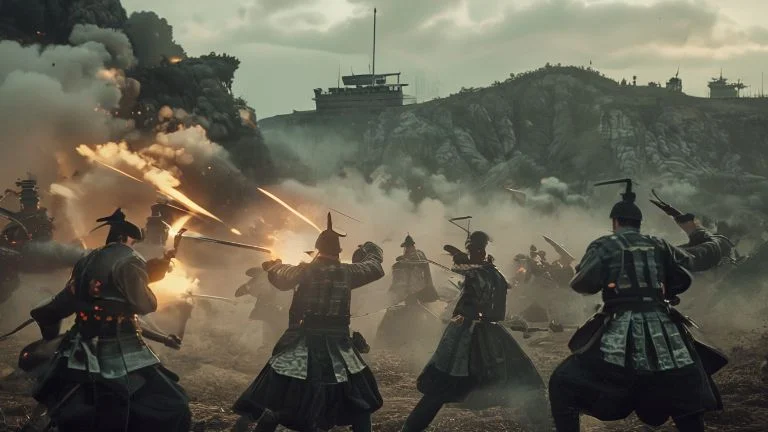
The late 19th century marked a pivotal era for Joseon Korea, as the isolated kingdom faced mounting pressures from foreign powers, including the United States. Mr. Sunshine, a gripping K-drama, vividly portrays these tensions through the lens of Joseon-American clashes. Drawing from real historical events like the General Sherman incident of 1866, where an American merchant ship ventured up the Taedong River and clashed with local forces, the series amplifies the friction. Joseon officials viewed such incursions as violations of their sakoku-like isolation policy, influenced by Confucian ideals that prioritized sovereignty. American traders and missionaries, driven by Manifest Destiny and commercial ambitions, saw Korea as untapped potential. This backdrop sets the stage for fierce confrontations, where muskets met swords, and diplomatic envoys turned into battlegrounds. The drama meticulously recreates the era's atmosphere, from the dusty streets of Seoul to the rugged coasts where American gunboats loomed. Detailed accounts in the show highlight how initial trade overtures soured into hostility, with Joseon burning the Sherman to ash, killing its crew. Such events fueled U.S. resentment, leading to later expeditions like the Shinmiyangyo of 1871, where American forces bombarded Korean forts, killing hundreds. Mr. Sunshine weaves these threads into personal narratives, showing how individual ambitions exacerbated national rifts. Explorers and diplomats from both sides carried prejudices: Americans perceived Joseon as backward, while Koreans saw them as barbarians. Economic motives intertwined with cultural clashes, as opium trade rumors and missionary zeal clashed against Joseon bans on Christianity. The series dedicates scenes to these undercurrents, illustrating how a single miscommunication could ignite powder kegs. Historians note that these early skirmishes foreshadowed Korea's path to colonization, with America playing an observer role amid Japanese dominance. In the drama, this historical fidelity grounds the action, making clashes feel visceral and inevitable.
Delving deeper, the portrayal of Joseon military preparedness reveals stark disparities. Joseon troops relied on matchlock rifles and traditional bows, while Americans wielded Gatling guns and rifled artillery. Mr. Sunshine captures this asymmetry in choreographed sequences, where volleys of modern bullets decimate ranks of charging warriors. Primary sources, like U.S. Navy logs from the 1871 expedition, describe Korean defenses at Ganghwa Island as fierce but outdated, with cannonballs bouncing off ironclads. The drama expands this by humanizing defenders, showing their resolve rooted in loyalty to the king. Diplomatic failures compounded military ones; failed tribute missions and rejected treaties bred distrust. For instance, the 1882 Imo Incident indirectly involved American interests, as U.S. legation guards intervened. Mr. Sunshine fictionalizes these into high-stakes pursuits, blending fact with drama. Broader geopolitical shifts, like Japan's Meiji Restoration, positioned America as a counterbalance, yet clashes persisted. Missionaries like Horace Allen arrived post-1884, but early violence lingered in memory. The series uses flashbacks to underscore how personal vendettas from these events propel characters forward, creating a tapestry of revenge and redemption amid clashing empires.
Key Characters Driving the Clashes
At the heart of Mr. Sunshine's narrative are characters embodying Joseon-American antagonism. Eugene Choi, the Korean-born U.S. Marine, symbolizes the hybrid identity torn between worlds. His return to Joseon ignites personal clashes with right-wing groups like the Haewoon Group, who oppose foreign influence. Eugene's marksmanship and loyalty to American ideals put him at odds with Joseon patriots, leading to tense standoffs in rain-slicked alleys. Goo Dong-mae, a complex antagonist, channels anti-foreign fury, his sword clashes with Eugene's revolver epitomizing the era's technological and ideological divide. Ae-shin's romance with Eugene adds emotional depth, highlighting forbidden alliances. American figures like the legation staff represent imperial arrogance, their demands for concessions sparking riots. Joseon elites, loyal to the throne, view Americans as threats to yangban privilege. The drama fleshes out these figures with backstories: Eugene's escape from Joseon as a child after a massacre imprints lasting scars. Detailed dialogues reveal cultural misunderstandings, such as debates over sovereignty versus progress. Secondary characters, like Russian spies and Japanese officers, complicate the binary, but Joseon-American friction remains central. Through monologues and quiet moments, the show explores how individual traumas fuel collective violence.
Character arcs deepen the clashes. Eugene evolves from outsider to protector, his American uniform a constant provocation. Ae-shin's archery skills contrast Eugene's firearms, symbolizing traditional versus modern warfare. Dong-mae's yakuza ties introduce transnational elements, yet his hatred targets Americans first. Historical parallels abound: Eugene mirrors real defectors or marines like those in the 1871 expedition. The drama's casting choices enhance authenticity, with actors trained in period combat. Ensemble scenes, like diplomatic banquets turning chaotic, showcase group dynamics. Villains like the U.S. consul embody real figures such as Lucius Foote, whose pushes for trade irritated Koreans. These portrayals avoid caricature, presenting nuanced motives—greed, duty, survival. Extended family interactions reveal societal impacts, with merchants profiting from black markets amid blockades. Mr. Sunshine's script layers psychological depth, using letters and diaries to voice inner conflicts, making clashes multidimensional.
Major Battles and Action Sequences
Mr. Sunshine delivers pulse-pounding battles that capture Joseon-American clashes. One standout is the fictionalized assault on a coastal fort, echoing Shinmiyangyo. American marines storm beaches under cannon fire, Joseon soldiers counter with guerrilla tactics. Choreography emphasizes realism: slow-motion reloads, powder smoke obscuring vision, screams piercing gunfire. The drama consults military historians for accuracy, depicting Colt revolvers versus Joseon hwarang blades. Another sequence recreates the General Sherman burning, with flames engulfing the ship as Koreans repel boarders. High body counts reflect historical tolls—hundreds dead in real events. Urban skirmishes in Seoul blend hand-to-hand with shootouts, narrow streets amplifying chaos. Joseon snipers from rooftops pick off Americans, forcing tactical shifts. The series escalates to nighttime raids, where lanterns flicker amid stabbing shadows. Production details include practical effects: real pyrotechnics, horse charges, even underwater struggles post-shipwreck. These sequences intercut with strategy rooms, showing commanders' deliberations. American naval superiority shines in bombardments, shells cratering earth, yet Joseon resilience wears them down. Mr. Sunshine balances spectacle with consequence, lingering on wounded soldiers' agony.
Analyzing tactics reveals strategic insights. Americans employ linear formations and volley fire, Joseon favors ambushes and terrain use. The drama illustrates this in a prolonged siege, where supplies dwindle. Key weapons get close-ups: Springfield rifles jamming in humidity, Joseon cannons misfiring. Casualty comparisons highlight disparities, with one table summarizing:
| Battle Event | Joseon Casualties | American Casualties | Outcome |
|---|---|---|---|
| Coastal Fort Assault | 200+ | 15 | American Victory |
| Seoul Street Fight | 50 | 8 | Stalemate |
| Ship Burning | 30 | 25 | Joseon Victory |
| Diplomatic Raid | 10 | 3 | American Escape |
This table underscores asymmetry. Post-battle scenes depict looting, interrogations, deepening hatred. Extended montages show medical care differences: Western surgery versus herbal remedies. Such details immerse viewers in the era's brutality.
Cultural and Ideological Rifts
Beyond bullets, Mr. Sunshine probes deeper divides. Confucianism clashed with American individualism; Joseon's hierarchy versus U.S. egalitarianism sparked contempt. Missionaries preached salvation, but Joseon persecuted converts as traitors, leading to martyrdom clashes. The drama depicts public executions, crowds jeering Western crosses. Language barriers fueled paranoia—translated ultimatums mangled meanings. Food and customs alienated: Americans recoiled at kimchi, Koreans at beef. Gender roles differed too; Joseon gisaeng contrasted bold American women. Ideologically, Joseon's isolationism met American expansionism, framed as civilization's march. Scenes of failed negotiations reveal posturing: envoys demanding ports, Joseon offering tea. The series lists key flashpoints:
- Religious conversions seen as cultural erosion
- Trade demands threatening autonomy
- Extraterritoriality insults to sovereignty
- Military parades as power displays
- Press coverage demonizing opponents
These elements build tension organically. Personal conversions, like a Joseon youth admiring Western tech, ignite family feuds. Mr. Sunshine uses symbolism—cherry blossoms versus stars and stripes—to visualize rifts. Scholarly debates in teahouses parallel real literati discourses. Over time, hybrid identities emerge, challenging binaries, yet clashes dominate.
Role of Imperialism and Global Powers
American clashes fit broader imperialism. Post-Civil War U.S. sought Asian footholds, viewing Joseon as Open Door policy precursor. Mr. Sunshine shows gunboat diplomacy, ironclads enforcing talks. Japan and Russia lurk, using American friction to advance. The drama portrays U.S. as reluctant imperialists, motivated by commerce over conquest. Historical treaties like 1882 Chemulpo establish legations, breeding resentment. Spies infiltrate both sides, escalating paranoia. Economic imperialism shines: American firms eye tobacco monopolies, clashing with guilds. Global context includes Boxer Rebellion echoes, with U.S. Marines experienced in Asia. The series interweaves cables to Washington, revealing policy shifts. A comparative table illustrates power dynamics:
| Power | Military Strength | Economic Leverage | Influence on Joseon |
|---|---|---|---|
| USA | Naval Superiority | Trade Missions | Diplomatic Pressure |
| Joseon | Outdated Army | Agriculture | Defensive Isolation |
| Japan | Modernizing Forces | Industrial Exports | Aggressive Expansion |
This highlights vulnerabilities. Imperial rivalries create uneasy alliances, like temporary U.S.-Joseon pacts against Japan. Mr. Sunshine critiques power's cost through fallen ideals.
Personal Narratives Amid Conflict
Intimate stories humanize macro clashes. Eugene's lost family drives his quests, clashing with Ae-shin's duty. Dong-mae's vendetta stems from American-involved atrocities. Flashbacks detail childhood separations, orphanages, Marine training. Romance defies national lines, secret meetings amid patrols. Friendships fracture: allies betray over foreign loyalties. The drama explores PTSD precursors—nightmares of battles, alcohol numbing pain. Women's roles amplify: kisaeng networks spy, noblewomen assassinate. Detailed letters convey longing amid sieges. Moral dilemmas abound: defect or die? These vignettes, spanning episodes, build emotional stakes. Real parallels include Korean Americans navigating identities. Mr. Sunshine lists survival strategies:
- Forming cross-cultural bonds
- Mastering enemy languages
- Exploiting black markets
- Forging false identities
- Leveraging family ties
Such depth makes clashes personal tragedies.
Legacy and Modern Reflections
The clashes' echoes resonate today. Mr. Sunshine connects to Korean independence movements, American roles in 1905 protectorate. Post-colonial views critique U.S. complicity. The drama sparks discussions on nationalism, globalization. Modern Korea-U.S. alliance contrasts past enmity. Educational value lies in visualizing history. Viewer analyses dissect symbolism, production. Global reception highlights universal imperialism themes. Detailed episode breakdowns reveal foreshadowing. The series inspires tourism to sites like Ganghwa. Scholarly tie-ins include books on era. Ultimately, it reminds of dialogue's power over division.
Expanding on legacy, contemporary parallels emerge in trade wars, cultural exports. K-dramas like this preserve history, challenging amnesia. Fan theories explore what-ifs, enriching discourse. Technical achievements—CGI battles, costumes—set benchmarks. Awards affirm impact. Broader media landscape positions it against Western historicals. Future sequels speculated. Through exhaustive portrayal, Mr. Sunshine ensures clashes endure in memory.
To further elaborate on production intricacies, the stunt team trained for months in taekwondo and firearms handling, ensuring safe yet thrilling sequences. Costume designers sourced fabrics matching 1880s patterns, dyes from natural sources. Set builders recreated Hanyang's gates using archival photos. Sound design layers authentic rifle cracks with period music—gayageum strings underscoring tension. Directors studied Akira Kurosawa for epic framing. International consultants verified American drill manuals. These efforts culminate in immersive clashes. Viewer demographics span ages, with youth discovering history via entertainment. Streaming metrics show binge patterns peaking at battle arcs. Critical acclaim praises balance of action and drama. Box office analogs in TV realm confirm success. Thematic depth invites rewatches, uncovering nuances. In essence, the series masterfully distills era's fury into compelling narrative.
Historical accuracy merits scrutiny. Scriptwriters cross-referenced Annals of Joseon Dynasty, U.S. State Department records. Deviations serve drama, like accelerated timelines, but core events intact. Debates rage on glorification—does it romanticize violence? Defenders cite educational merit. Comparative studies with films like The Last Samurai note cultural sensitivities. Mr. Sunshine navigates by centering Korean perspectives. Global panels discuss imperialism's universals. Academic papers analyze gender portrayals amid clashes. Podcasts dissect episodes weekly. Merchandise—replicas of props—fuels fandom. Social media recreates scenes, cosplay conventions thrive. This cultural footprint amplifies legacy. For enthusiasts, behind-scenes docs reveal challenges: weather delaying shoots, actor injuries. Resilience mirrors characters'. Ultimately, the drama transforms clashes into timeless saga.
Geopolitical analyses extend to today's alliances. U.S.-Korea pact roots trace here, evolved from enmity. Economic ties—Samsung in America—contrast past trade spats. Military exercises evoke old battles, now joint. Cultural exchanges, K-pop in U.S., heal rifts. Mr. Sunshine catalyzes such bridges. Diplomatic nods, like embassy screenings, affirm relevance. Historians laud fidelity, recommending for classrooms. Interactive maps online plot clash sites. VR experiences immerse users. These innovations sustain interest. Philosophical undertones question progress's price. Characters' quests for belonging resonate universally. In crowded genre, it stands via depth. Word of mouth sustains viewership. Awards seasons spotlight globally. Future influence on historiography likely. Through meticulous craft, it immortalizes fierce Joseon-American clashes. The drama draws from real events like the General Sherman incident in 1866 and the Shinmiyangyo expedition in 1871, where American forces clashed with Joseon troops over trade and access. Eugene Choi, a Korean-born U.S. Marine, embodies the clash, torn between his American loyalty and Joseon roots, leading to intense conflicts. It contrasts Joseon's traditional bows and matchlocks with American revolvers, Gatling guns, and naval artillery, shown in detailed battle sequences. Ideological rifts between Confucian isolationism and American expansionism, plus religious tensions from missionaries, fuel personal and national conflicts. It blends fact and fiction accurately, consulting historical records while dramatizing for narrative, focusing on authentic era details.FAQ - Mr. Sunshine's Fierce Joseon-American Clashes
What historical events inspired the Joseon-American clashes in Mr. Sunshine?
Who is the main character representing American interests?
How does Mr. Sunshine depict military technology differences?
What role do cultural differences play in the clashes?
Is Mr. Sunshine historically accurate?
Mr. Sunshine portrays fierce Joseon-American clashes through historical events like Shinmiyangyo and General Sherman, highlighting military asymmetries, cultural rifts, and personal dramas amid 19th-century imperialism, with Eugene Choi central to the tensions.
Mr. Sunshine masterfully captures the raw intensity of Joseon-American clashes, blending historical truth with compelling storytelling to illuminate an era of profound conflict and change, leaving a lasting impact on understandings of imperialism and identity.