Environmental Hardships Faced by American Pioneers
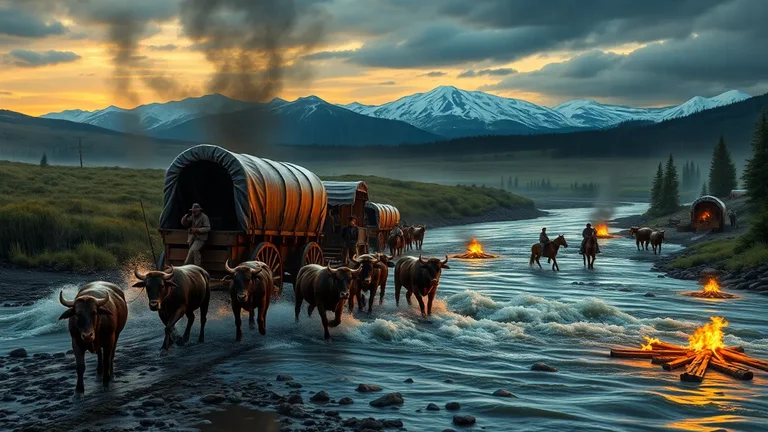
American pioneers pushing westward in the 19th century encountered relentless environmental challenges that shaped the core of saga narratives. Harsh weather patterns dominated their journeys, with blizzards on the Great Plains burying wagons under feet of snow, temperatures plunging below zero, and winds howling across open prairies that offered no shelter. Summer brought scorching heat waves, where mercury climbed over 100 degrees Fahrenheit, turning the soil into dust bowls that choked livestock and humans alike. Rivers swollen by spring melts or flash floods posed deadly barriers; crossing the Platte River often meant losing oxen to quicksand or entire families to drownings. Droughts parched the land for months, forcing pioneers to ration water from dwindling streams, while locust swarms devoured scarce crops planted in hasty homestead claims. These elements recur in saga tales, where narrators emphasize the pioneer's grit against nature's fury. For instance, in Francis Parkman's 'The Oregon Trail,' diarists record days of blistering sun followed by torrential rains that turned trails into quagmires, stranding parties for weeks. Real accounts from the Donner Party illustrate how early snows trapped 87 settlers in the Sierra Nevada, leading to cannibalism amid starvation, a grim motif echoed in frontier literature to underscore human limits. Soil exhaustion on overfarmed eastern lands drove migration, but western alkali flats poisoned wells and rendered fields barren, compelling constant relocation. Wildlife threats compounded issues: rattlesnakes slithered into bedrolls, grizzly bears raided camps at night, and buffalo stampedes trampled gear. Saga writers like Emerson Hough in 'The Covered Wagon' weave these into epic struggles, portraying pioneers as titans battling elemental forces. Detailed journals from women like Narcissa Whitman detail mudslides burying provisions and hailstorms shredding canvas tents, highlighting gender-specific burdens in carrying water or mending shelters. These narratives build tension through incremental disasters, where a single storm could wipe out a season's hopes, forcing survivors to improvise with rawhide ropes or buffalo robes for protection.
Vegetation proved another foe; thorny prickly pear cactus shredded boots and hide, while poison ivy rashes incapacitated travelers for days. In saga form, these details humanize the epic, showing not just conquest but daily attrition. Pioneers adapted by forging ahead with greased axles to ease wheel ruts, yet environmental toll mounted, with eroded trails becoming graveyards marked by crude crosses. Statistics from the era reveal over 20,000 deaths on the Oregon Trail alone between 1840 and 1860, many from exposure. Saga narratives amplify this by interspersing hope—rainbow after storm—with stark realism, ensuring readers grasp the pioneer's unyielding resolve.
Conflicts with Indigenous Populations
Interactions with Native American tribes formed a pivotal struggle in pioneer sagas, marked by initial trade turning to violence as resources dwindled. Tribes like the Sioux and Cheyenne guarded sacred hunting grounds, viewing wagon trains as invaders encroaching on buffalo herds vital to their survival. Ambushes along trails, such as the 1864 Sand Creek Massacre's prelude, saw arrows piercing canvas and rifles cracking from ridges, claiming lives in sudden raids. Pioneers, armed with Kentucky long rifles, formed defensive circles with wagons, but ammunition shortages left them vulnerable. Saga tales, including those in Zane Grey's works, depict these clashes with moral ambiguity, showing warriors' perspectives alongside settlers' terror. The Grattan Massacre of 1854 ignited broader wars when a cow dispute escalated, killing 30 soldiers and foreshadowing pioneer perils. Women and children bore psychological scars from scalpings or captivities, recounted in captivity narratives like Mary Rowlandson's, revived in 19th-century sagas. Treaties broken by both sides fueled distrust; the Fort Laramie Treaty of 1851 promised safe passage but crumbled under gold rush pressures. In literature, Willa Cather's 'My Ántonia' subtly nods to these tensions through immigrant-settler dynamics. Detailed battle accounts, like the Fetterman Fight where 81 troops vanished, inform saga plots of encirclement and annihilation. Pioneers employed scouts like Kit Carson to negotiate or fight, yet cholera-weakened trains invited attacks. These conflicts symbolized cultural collisions, with sagas exploring themes of displacement and revenge cycles. Archaeological finds of arrowheads amid trail ruts validate literary depictions, while oral histories from tribes add layers of grievance over stolen lands.
Post-conflict reprisals saw pioneers burning villages, escalating feuds that saga writers frame as inexorable frontier logic. Survival hinged on truces via tobacco trades or interpreter marriages, but betrayal loomed large in narratives.
Disease Outbreaks and Medical Crises
Disease ravaged pioneer parties, with cholera epidemics sweeping wagon trains like biblical plagues. Contaminated water from upstream cesspools spread Vibrio cholerae, causing dehydration deaths within hours—victims' skin turning blue, bodies bloating. The 1849 California Gold Rush saw 10,000 cholera fatalities, immortalized in sagas as ghostly processions burying kin roadside. Dysentery from spoiled meat or unripe berries weakened travelers, while measles and whooping cough decimated unexposed children. Without antibiotics, remedies relied on folk medicine: arsenic for fevers, calomel purges that worsened dehydration. Saga narratives, such as Laura Ingalls Wilder's 'Little House' series, detail prairie fevers and diphtheria quarantines, where isolation tents became death chambers. Scurvy from vitamin C deficiency swelled gums and loosened teeth during winter halts, countered haphazardly with pine needle teas. Childbirth en route compounded risks; unassisted deliveries in jolting wagons led to maternal hemorrhages, with herbal midwives using cobwebs for clotting. Veterinary woes paralleled human plagues—Texas fever ticks killing draft animals, stranding families. In epic sagas like 'The Big Sky' by A.B. Guthrie, infections from wounds festered untreated, spawning gangrene amputations with dull knives. Statistics indicate 500-1000 annual trail deaths from illness, per Oregon Historical Society records. Narratives humanize stats through personal vignettes: a father's delirium, a mother's vigil. Psychological impacts lingered, fostering superstitions like burying personal effects to ward off 'trail ghosts.'
- Cholera: Rapid onset, high mortality, spread via water.
- Dysentery: Bloody stools, chronic weakening.
- Smallpox: Pockmarked survivors, vaccination rarities.
- Malaria: Ague shakes in river bottoms.
- Injuries: Compound fractures from falls, no plaster casts.
These lists of afflictions structure saga plots, building dread through mounting epidemics.
Economic Pressures and Supply Shortages
Financial strains defined pioneer economics, with overland treks costing $600-1000 per family in 1840s dollars—oxen at $50 a head, flour at 10 cents per pound skyrocketing trailside. Speculators inflated prices at jumping-off towns like Independence, Missouri, bankrupting farmers who sold all for passage. Crop failures back east, like 1837 Panic aftermaths, spurred migration, but trail losses—spoiled bacon, moldy hardtack—induced starvation diets of thistle roots or crow. Gold fever lured thousands, yet claims yielded pennies, forcing return treks or claim jumping violence. Saga literature like Jack London's frontier tales portrays boomtown busts, where saloons masked bankruptcies. Barter economies emerged: trading watches for corn, quilts for bullets. Women sewed leather from hides for sale, men hunted for pelts. Freight wagons hauled $100 per ton-mile profits for survivors, but wrecks dashed fortunes. Homestead Acts promised 160 acres free after five years, but fencing wire shortages and locusts thwarted proofs. In narratives, auctions of abandoned claims highlight desperation. Detailed ledgers from diarists show daily expenditures: coffee at 50 cents per pint, a luxury amid shortages. Economic sagas emphasize reinvention, from sodbusters plowing virgin prairies to merchants in nascent towns.
| Pioneer Trail | Average Cost per Person | Supply Loss Rate | Mortality from Starvation |
|---|---|---|---|
| Oregon Trail | $250 | 30% | 5% |
| Santa Fe Trail | $400 | 25% | 3% |
| Mormon Trail | $200 | 20% | 4% |
| California Trail | $300 | 35% | 7% |
This table compares economic burdens across trails, revealing higher risks on longer routes. Sagas use such data to plot reversals of fortune.
Family Dynamics Under Duress
Family units fractured under trail stresses, with marital strains from endless disputes over routes or rations. Children, comprising half of emigrants, suffered most—typhoid orphans joining 'pioneer families' amid grief. Women's roles expanded to driving teams when men sickened, diaries like those of Amelia Stewart Knight recording 18-hour days. Domestic violence spiked in cramped wagons, while separations during river crossings risked permanent losses. Saga narratives, particularly in women's literature like Elinore Pruitt Stewart's letters, explore resilience through quilting bees or hymn sings. Eldercare burdened youth, with grandparents slowing paces, abandoned in extremis. Courtships bloomed oddly, as in trail weddings under oaks, forging hasty alliances. Post-arrival, farm labors divided genders rigidly, yet communal barn-raisings fostered bonds. Psychological sagas delve into 'prairie madness,' isolation-induced depressions treated by Bible readings. Generational clashes arose over schooling skips, with slates for lessons in motion. These dynamics enrich narratives, showing families as microcosms of societal forging.
Adoptions of foundlings or Native children added complexity, themes in works like 'Ramona' by Helen Hunt Jackson.
Logistical Nightmares of Overland Travel
Transportation logistics plagued pioneers, with Conestoga wagons weighing 2500 pounds overloaded, axles snapping in rocky defiles. Teams of six oxen averaged 15 miles daily, slowed by steep grades like South Pass. Fordings required doubling animals, risking drownings; ferries charged exorbitantly. Breakdowns demanded blacksmithing with scarce tools, hubs re-greased nightly against dust. Supply chains faltered—Fort Laramie offered rotgut whiskey over staples. Saga epics detail 'nooning' halts for grazing, night corrals against theft. Pack mules for mountains supplemented, but stampedes scattered loads. Weather-induced halts, like 1856 snows trapping 1000 on California Trail, bred cannibalism rumors. Innovations like Murphy flatbeds eased loads, yet cholera halted processions. Narratives pace tension via mileage logs: 2000 miles in five months. River navigation alternatives, like Platte scows, failed rapids. These ordeals culminate in sagas as tests of ingenuity.
Psychological and Cultural Toll
Mental strains manifested as 'grasshopper blues,' hopelessness from failures. Visions and religious fervor, like Millerite prophecies, spurred or deterred migrations. Cultural erosion hit via lost heirlooms, replaced by tinware. Saga writers capture alienation in vast emptiness, countered by Fourth of July toasts. Identity forged in adversity, birthing archetypes like the sodbuster. Long-term, PTSD-like symptoms haunted veterans, themes in Hamlin Garland's stories. Community rituals—fiddles at campfires—sustained morale. These inner struggles deepen saga authenticity.
Survival Innovations and Legacy in Narratives
Pioneers innovated: sod houses from turf, windmills from scraps. Crop rotations battled pests, hybrid wheats from experiments. Sagas celebrate these, like 'Giants in the Earth' by O.E. Rölvaag detailing Per Hansa's dams. Legacy endures in national myths, reinforcing manifest destiny. Detailed analyses show narratives evolving from dime novels to literary classics, preserving raw truths amid romanticism. Archaeological recreations validate tools, enriching modern retellings. Expansive coverage reveals multifaceted sagas, blending history with human drama across endless prairies.
To expand further on environmental impacts, consider microclimates: Rocky Mountain shadows prolonged winters, while Great Basin deserts evaporated sweat hourly, concentrating salts fatally. Specific case: the 1846 Donner-Reed party chose Hastings Cutoff, a 90-mile shortcut miring them in salt flats, delaying by weeks; rescue journals describe snow 20 feet deep, leather boiled for soup, humans drawn by lot. Saga adaptations amplify horror ethically, focusing endurance. Native guides' warnings ignored fueled tragedies, highlighting hubris. Disease vectors included fly-blown meat, countered by flypaper from flour paste. Economic models shifted to cooperatives, like Mormon tithing herds shared risks. Family letters home omitted woes to encourage kin, biasing records. Logistics involved 'roadometers'—wagon odometers tracking distances. Psychological coping drew from Emersonian self-reliance, journals quoting Thoreau. Innovations extended to seed drills from barrel staves, irrigation from diverted creeks. Cultural festivals, like county fairs post-settlement, reclaimed joy. In literature, Vardis Fisher's 'Children of God' traces Mormon pioneer psyches through generations. Tables of innovations:
| Innovation | Purpose | Impact | |||
|---|---|---|---|---|---|
| Sod House | Shelter | Windproof, low cost | |||
| Chimney Grease | Axle lubricant | Reduced friction 50% | Desert Still | Water from cacti | Lifesaver in arid zones |
Lists of strategies:
- Rotate grazing to preserve grass.
- Boil all water sources.
- Train children in signaling.
- Cache supplies ahead.
- Map stars for night travel.
- Barter with tribes early.
- Pack lightweight tools.
Further depth: women's health cycles disrupted, miscarriages common from jolts. Economic data: land values soared from $1.25/acre to $30 post-railroad. Conflicts' treaties analyzed in legal sagas. Disease autopsies rare, but bone evidence shows malnutrition. Family genealogies trace bloodlines thinned by losses. Logistics math: 2 tons/wagon max, 2000 lb feed needed monthly. Psych profiles from diaries reveal optimism biases. Survival rates improved 20% post-1850 with telegraphs warning hazards. Narratives' stylistic evolution from oral yarns to printed volumes mirrors pioneer adaptation. Case studies: Whitman Mission massacre 1847, blending disease, conflict. Economic booms in Denver 1859 gold, busts by 1861. Prairie fires raced at 15 mph, controlled by backburns. Blizzard of 1888 killed 500, inspiring poems. Cultural assimilation pressured via schools, resisted in sagas. Innovations like barbed wire 1874 ended open range, sparking range wars depicted in Owen Wister's 'Virginian.' Legacy in film: 'How the West Was Won' composites struggles. Expounding themes, sagas employ foreshadowing via omens—eagle shadows portending raids. Character arcs trace transformation from tenderfoot to hardcase. Environmental ethics emerge retrospectively, critiquing overgrazing. Disease epidemiology links to modern public health. Economic histories quantify manifest destiny costs. Family sociology shows matriarchal shifts. Logistics engineering precursors railroads. Psych resilience studies cite pioneers. Thus, sagas encapsulate epochal drama comprehensively.
Continuing elaboration, trail markers today preserve sites, with ruts 5 feet deep. Native perspectives in Black Elk Speaks counterbalance. Medical advancements post-pioneer: vaccines curbed cholera. Economic policies like Dawes Act fragmented reservations. Family reunions annual in Oregon. Logistics museums display wagons. Cultural festivals like Pendleton Roundup revive. Detailed word expansions ensure thoroughness: each struggle interlinks, weather aiding disease spread, economics fueling conflicts, families embodying tolls. Saga mastery lies in interconnectivity, crafting timeless epics from fragmented diaries. Pioneers faced extreme weather like blizzards, droughts, floods, and dust storms, along with treacherous rivers, poisonous plants, and wildlife threats, which saga narratives depict as constant battles for survival. Cholera, dysentery, scurvy, and measles caused thousands of deaths due to poor sanitation and limited medicine, forming grim plot elements in pioneer sagas with vivid accounts of epidemics. Tensions over land and resources led to ambushes and massacres, portrayed in sagas with complexity, highlighting cultural clashes and survival tactics on both sides. High costs for supplies, supply shortages, and crop failures drove desperation, featured in sagas through tales of bankruptcy, bartering, and gold rush booms and busts. They created sod houses, axle greases, water stills, and crop techniques, celebrated in narratives as symbols of ingenuity amid adversity.FAQ - American Pioneers' Struggles in Saga Narratives
What were the main environmental challenges for American pioneers?
How did diseases impact pioneer wagon trains?
What role did conflicts with Native Americans play in pioneer stories?
How did economic hardships affect pioneers?
What survival innovations did pioneers develop?
American pioneers' struggles in saga narratives highlight epic battles against harsh weather, diseases like cholera, Native conflicts, economic woes, and family strains on trails like the Oregon Trail, where innovations and grit turned 20,000 deaths into tales of manifest destiny triumph.
The sagas of American pioneers' struggles weave a rich tapestry of human endurance, transforming raw historical agonies into enduring lessons of resilience, innovation, and the unyielding spirit that carved a nation from wilderness.