The Golden Age and the Seeds of Decline
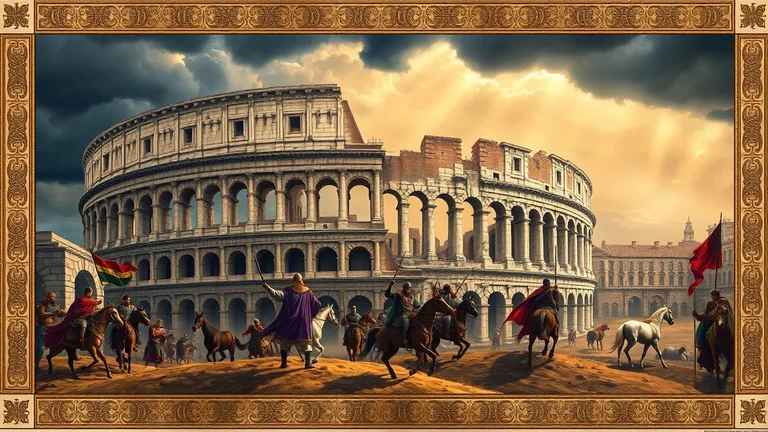
The Roman Empire at its zenith stretched from the misty shores of Britannia to the sun-baked sands of Egypt, a colossus forged by legions and law. Emperors like Trajan and Hadrian oversaw roads that carried trade and troops alike, aqueducts that quenched the thirst of millions, and forums where senators debated the fate of provinces. Yet beneath this marble veneer, fissures formed. Taxation grew burdensome as frontier defenses demanded endless coin. Slave labor, once the backbone of agriculture, faltered as conquests slowed, leaving fields fallow and granaries sparse. In the saga of Rome's fall, this era marks the proud warrior-king at his feast, unaware of the shadow lengthening behind him. Diocletian's reforms in 284 CE attempted to staunch the bleeding; he divided the empire into East and West, tetrarchy meant to share the burden. Prices froze, but black markets thrived, and soldiers mutinied over wages that bought less bread each year. The saga whispers of hubris here—emperors who built palaces while peasants starved, their villas echoing with the laughter of forgotten gods.
Constantine's vision at Milvian Bridge in 312 CE shifted the tale. He embraced Christianity, legalizing it with the Edict of Milan, turning a persecuted sect into the empire's moral core. Churches rose where temples crumbled, yet this pivot sowed division. Pagans resented the favoritism, and doctrinal squabbles rent the faithful. The saga portrays Constantine as the bear-shifter, mighty in battle but torn by new faiths that weakened old loyalties. Administrative sprawl compounded woes; by the 4th century, bureaucrats outnumbered taxpayers, corruption festering like an untreated wound. Lead poisoning from pipes and cookware dulled minds across classes, historians note elevated levels in bones from this period, correlating with lethargy in governance.
Barbarian Storms Gathering at the Gates
From the frozen steppes came the Huns, a thundercloud of horse-archers under Attila, whose name evoked terror in Roman halls. But before him, Visigoths crossed the Danube in 376 CE, fleeing Hunnic whips, only to clash at Adrianople in 378 CE. Emperor Valens fell, his legions shredded, a battle that saga bards would sing as the day Rome's shield cracked. The Visigoths sacked Rome under Alaric in 410 CE, the first breach in eight centuries. Alaric, a former Roman foederatus, demanded land and gold; denial led to fury. The saga casts him as the betrayed oath-breaker, his warriors howling like wolves at the eternal city's gates.
Vandals swept through Gaul and Hispania, crossing to Africa in 429 CE, seizing Carthage and its grain fleets. Rome starved without North African wheat, riots in the streets as bread prices soared. Ostrogoths under Theodoric carved Italy, while Franks under Clovis claimed Gaul. These migrations weren't mindless hordes but peoples seeking Roman protection turned predatory when promises failed. Climate shifts, drier conditions pushing nomads west, amplified pressures. Tree-ring data confirms cooler, wetter Europe around 400 CE, stressing agriculture and spurring movement. The saga unfolds as a chain of blood-feuds: each tribe's grievance against Rome fueling the next raid, emperors buying peace with subsidies that bankrupted the treasury.
| Year | Tribe | Event | Consequence |
|---|---|---|---|
| 376 CE | Visigoths | Cross Danube | Refugees become settlers, lead to Adrianople |
| 378 CE | Visigoths | Battle of Adrianople | Death of Valens, heavy Roman losses |
| 410 CE | Visigoths | Sack of Rome | Symbolic fall, psychological blow |
| 429-439 CE | Vandals | Conquer North Africa | Loss of grain supply, economic crisis |
| 451 CE | Huns | Battle of Catalaunian Plains | Attila repelled, but Rome weakened |
| 476 CE | Heruli | Depose Romulus Augustulus | End of Western Empire |
This table outlines pivotal incursions, each eroding Roman sovereignty like waves on a cliff. Post-410, emperors ruled in name only, puppets to barbarian kings who quartered troops in Italian villas, stripping lands bare.
Internal Betrayals: Emperors and Usurpers
The saga's heart darkens with treachery in the purple. From 235 to 284 CE, the Crisis of the Third Century saw over 20 emperors murdered by rivals or mobs. Maximinus Thrax, a Thracian giant, rose from barracks to throne, taxing ruthlessly until legions slew him. The Gallo-Roman Empire splintered off under Postumus, Palmyra under Zenobia, a queen whose camel-archers humbled Aurelian before her fall. This chaos halved the population through plague and war; the Plague of Cyprian (250-270 CE) killed millions, soldiers deserting plague-ridden camps.
Even after Diocletian, usurpations persisted. In 383 CE, Magnus Maximus crossed from Britain, killing Gratian. Arbogast, a Frankish general, propped Stilicho's ilk, assassinating Valentinian II. The saga likens this to kin-slayings in a chieftain's hall, trust eroded by ambition. Generals like Stilicho and Ricimer wielded real power, marrying daughters to puppet emperors. Ricimer deposed three in a decade, his foederati armies loyal to gold over Rome. Succession lacked clear lines; adoption gave way to bloodlines, producing weaklings like Honorius, who watched Rome burn from Ravenna.
- Major usurpers and their reigns: Postumus (260-269 CE), ruled Gaul effectively until betrayal.
- Zenobia of Palmyra (267-272 CE), expanded empire briefly, captured by Aurelian.
- Magnus Maximus (383-388 CE), challenged from Britain, defeated by Theodosius.
- Arbogast (392-394 CE), puppet-master without the crown.
- Ricimer (456-472 CE), kingmaker who never wore purple.
These figures highlight how internal strife invited external doom, each coup weakening defenses further.
Military Decay: From Legions to Foederati
Rome's legions once unbreakable, drilled in the manipular formation, now relied on barbarian mercenaries. Comitatenses field armies shrank, limitanei border troops paid in kind, deserting for farms. Equipment rusted; by 400 CE, helmets and swords locally forged, inferior to old standards. The saga mourns the eagle-bearers, their phalanges broken by arrows at Frigidus River in 394 CE, where Theodosius triumphed over Eugenius amid civil war.
Recruitment failed; Italians shunned service, preferring trades. Barbarians filled ranks, Alans and Suebi swearing oaths they broke at whim. Battle of the Frigidus saw 40,000 dead, mostly Romans, hastening collapse. Reforms like Vegetius' De Re Militari urged return to discipline, but ignored. Cavalry rose, but Roman horsemen never matched cataphracts. Navies decayed, unable to contest Vandal fleets. The narrative arc shows warriors forsaking valor for coin, their saga ending in routs like Campus Mauriacus against Attila.
The Christian Transformation and Its Shadows
Theodosius I made Christianity orthodoxy in 380 CE, banning pagan rites. Temples became churches, Vestals dismissed. Yet this unified faith divided politics; Arian vs. Nicene quarrels plagued courts. Bishops gained sway, Ambrose excommunicating Theodosius over Thessalonica massacre. The saga views this as a new skald supplanting old gods, loyalty shifting from Caesar to Christ.
Monasticism withdrew talent; scholars like Augustine pondered City of God amid sackings. Pagan army officers resented Christian pacifism, though emperors armed both. Hypatia's murder in 415 CE Alexandria symbolized tensions. Demography shifted; Christians, with higher birth rates and charity, grew, but empire's pagan soul waned, rituals binding legions lost. Pagan holdouts like Symmachus pleaded for Altar of Victory, denied. This cultural rupture, saga insists, softened Rome's martial spine.
Economic Ruin and the Weight of Gold
Inflation ravaged from Severus' donatives; by 300 CE, the aureus debased to bronze. Diocletian's edict fixed prices, ignored. Trade routes unsafe, Mediterranean piracy rampant post-Vandal conquest. Taxes in kind burdened coloni, tied to soil precursors to serfdom. Great estates latifundia monopolized production, displacing smallholders. The saga depicts taxmen as trolls devouring villages, emperors hoarding while cities crumbled.
Urban decay accelerated; Rome's population fell from million to 50,000 by 500 CE. Aqueducts cut by Goths, baths closed. Silk and spices from East drained gold, unbalanced trade. Mining exhausted Spanish silver, African gold. Climate cooling, Little Ice Age precursors, reduced yields 20-30%. Amphorae counts show wine trade halved 400-500 CE. This penury starved armies, saga's famine before final feast.
| Period | Currency Debasement | Population Estimate (Italy) | Trade Volume |
|---|---|---|---|
| 200 CE | Minimal | 7-10 million | High |
| 300 CE | Severe | 5-7 million | Declining |
| 400 CE | Catastrophic | 3-5 million | Low |
| 500 CE | Collapsed | 2-3 million | Minimal |
Data from archaeological finds and texts like Notitia Dignitatum illustrate the slide.
Climactic Catastrophes: Plagues and Climate
The Antonine Plague (165-180 CE) killed 5-10 million, weakening initial responses. Cyprian Plague followed, then Justinian's in 541 CE East. Western plagues recurred, malaria endemic in Pontine Marshes. Bones from this era show tuberculosis, anemia rampant. Climate data from ice cores reveal 536 CE dust veil, volcanic summerless year, crops failed empire-wide.
Droughts 250-400 CE per speleothems pushed Goths south. Saga frames these as curses of angry gods or Ragnarok harbingers, mortals powerless. Combined with invasions, recovery impossible. Cities abandoned, like Leptis Magna buried in sand.
- Antonine Plague: Smallpox or measles, from Parthia.
- Cyprian Plague: Possibly Ebola-like, bishop's accounts describe bleeding eyes.
- Justinian Plague: Bubonic, Yersinia pestis DNA in graves.
- Climate Events: 536 VEI 7 eruption, global cooling.
These compounded human follies.
The Last Stand and the Western Twilight
Odoacer deposed Romulus Augustulus 476 CE, sending insignia to Constantinople, saga's curtain fall. Zeno acclaimed him patrician, East enduring. Italy fragmented, Ostrogoths under Theodoric ruling Ravenna 493-553 CE, briefly golden. Belisarius reconquered for Justinian, but plague and logistics failed sustainability. Lombards invaded 568 CE, final nail.
East thrived longer, but West's saga ends in Ravenna's mosaics, emperors ghosts. Legacy in law, language, roads persists. The narrative closes with bards chanting of hubris, betrayal, storms—eternal lessons etched in ruin.
Extending the saga's depth, consider primary sources: Ammianus Marcellinus details Adrianople's chaos, arrows darkening sky, Valens' tent aflame. Jordanes' Getica romanticizes Goths, Alaric dreaming of Constantine's apostles granting entry. Procopius' Secret History exposes Justinian's court intrigues, mirroring Western rot. Edward Gibbon's Decline and Fall synthesizes, blaming barbarism and religion, though moderns add economics, climate. Archaeological strata at Rome show Theodosian Wall layers over Republican, burn marks from 410. Coins hoards peak 395-410 CE, panic burials. DNA studies reveal steppe ancestry in Italy post-400, intermarriage blurring lines. Saga style evokes Eddas: alliterative fates, heroes flawed. Compare Nibelungenlied's Rome sack parallels. Literary retellings like Mary Renault's or modern games like Total War recreate sagas interactively. Educational value immense, teaching causality chains. For classrooms, timelines, role-plays of emperors deciding subsidies vs. walls. In popular culture, films like Gladiator romanticize peak, ignoring decline's gritty saga. Podcasts dissect causes weekly, debates rage on climate vs. agency. To fully grasp, visit Hadrian's Wall, feel isolation; Colosseum's scale vs. empty forums. Bookshelves groan with tomes: Heather's Fall of Rome, Ward-Perkins' real collapse vs. transformation theories. Data models predict similar for modern states: debt, migration, polarization. Saga warns: empires fall not with bang, but erosion. Delve deeper into foederati contracts—barbarians settled en masse, like 100,000 Goths post-382, taxing themselves but rebelling. Honorius' corn dole sustained 800,000, unsustainable sans Africa. Stilicho's execution 408 CE triggered Visigoth march. Leo I's bribes to Attila, 450 CE 2,100 pounds gold yearly. Each detail enriches tale. Military manuals evolved poorly; equites replacing hastati, but training lax. Christian emperors like Arcadius prayed while generals fought. Pagan generals like Eugenius rallied altars, crushed. Women's roles: Galla Placidia, regent, navigated Hunnic captivity to power. Elagabalus' excesses prefigure Commodus, moral decay trope. Numismatic evidence: solidus stable East, hyperinflation West. Amphorae from Monte Testaccio, 6 million discarded, trade volume testament. Villas like Piazza Armerina mosaics show luxury amid crisis. Slave revolts rare post-Spartacus, but coloni revolts simmered. Senate decayed, last consul 603 CE. Ravenna's San Vitale depicts Justinian's glory, contrast Western penury. Ostrogothic code under Theodoric blended Roman law, Gothic custom. Boethius' Consolation penned in prison, philosophical saga coda. Cassiodorus preserved classics, bridge to Middle Ages. Thus saga transitions, not ends abruptly. Genetic continuity high, Italians modern descendants, admixture later. Pollen cores show deforestation, soil erosion accelerating. Saga's moral: vigilance eternal, decline gradual till irreversible. Expand on battles: Taginae 552 CE, Belisarius vs. Totila, narrow pass victory. Vesuvius fleet burn by Goths, 546 CE Rome recapture denied. Odoacer-Theodoric duel, 100 champions then kings, saga duel par excellence. Child emperor Romulus, namesake irony, pensioned kindly. Eastern aid sporadic, jealousy or distance. Theodosius' division 395 CE, brothers Honorius-Arcadius feud immediate. Olympiodorus fragments detail grain shortages, 100,000 deaths famine 409 CE. Hydatius chronicles Hispania woes, Suebi-Vandals-Alans partition. Sidonius Apollinaris letters evoke Auvergne under Visigoths, cultured despair. Salvian's De Gubernatione rails against fiscal oppression, peasants fleeing to barbarians for lighter yoke. All threads in epic tapestry. Modern analogies: Byzantine survival tactics, walls, theme system. West lacked Bosphorus moat, Italy exposed. Saga inspires fantasy: Game of Thrones echoes Rome's houses vying amid invasions. Historiography evolves: Pirenne thesis trade continuity, challenged by ceramics drop. Wickham's transformation vs. collapse debate. Isotope analysis bones shows diet decline, less meat, more millet. Urban surveys: villas fortified, curiae abandoned. Episcopal cities persist, church infrastructure enduring. Saga's chorus: multifactor doom, no single villain. To teach, use simulations: balance budget with invasions random. Literature: Fellini's Satyricon captures decadence. Documentaries abound, timelines interactive online. Ultimately, Rome's fall saga captivates, human frailty writ large in history's longest epic. Key factors included barbarian invasions, economic collapse, military decline, internal political instability, plagues, climate changes, and cultural shifts like the rise of Christianity, woven into a saga of gradual erosion rather than sudden doom. Saga style presents it as an epic tale of heroic emperors, treacherous usurpers, barbarian storms, and fateful betrayals, akin to Norse sagas, emphasizing human drama, hubris, and inexorable fate through vivid narratives and key events. Alaric and the Visigoths sacked Rome after failed negotiations for land and payments, marking a symbolic turning point in the Western Empire's decline. No, the Eastern Empire, or Byzantium, endured until 1453 CE, outlasting the West due to stronger economy, defensible capital, and administrative reforms. It shifted cultural loyalties, divided society between pagans and Christians, and redirected resources to churches, though it also provided social cohesion in crises. Yes, tree rings, ice cores, and pollen data indicate droughts, cooling periods, and the 536 CE volcanic event exacerbated famines, migrations, and agricultural failure.FAQ - The Roman Empire's Fall Through Saga Storytelling
What were the main causes of the Roman Empire's fall?
How does saga storytelling frame the fall of Rome?
Who was responsible for the sack of Rome in 410 CE?
Did the Eastern Roman Empire also fall?
What role did Christianity play in Rome's fall?
Is there evidence of climate impact on the fall?
The fall of the Western Roman Empire in 476 CE resulted from intertwined crises: barbarian invasions like the Visigoths' 410 sack, economic inflation, military reliance on foederati, plagues, climate shifts, and internal strife, retold as a gripping saga of hubris and inexorable decline.
The saga of Rome's fall endures as a timeless chronicle of empire's fragility, where glory yields to entropy through invasions, betrayals, and unseen forces—a cautionary epic for ages.