The Historical Foundations of the Silk Road
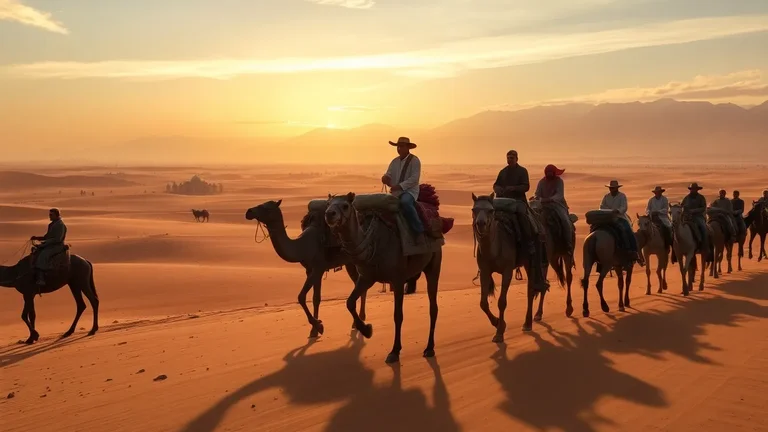
The Silk Road emerged around the 2nd century BCE during the Han Dynasty in China, when Emperor Wu sent Zhang Qian on diplomatic missions westward. These journeys opened pathways for trade that stretched from Xi'an in China through Central Asia, Persia, and into the Mediterranean. Merchants carried silk, porcelain, spices, and paper eastward and westward, but the routes also facilitated the movement of ideas, religions, and technologies. In epic historical sagas, this network becomes a canvas for tales of heroism and peril, where protagonists navigate vast deserts like the Taklamakan, whose name means 'go in and you won't come out.' Sagas often depict the road's branches: the northern route skirting the Gobi Desert and the southern through Afghanistan and India. Archaeological evidence from sites like Dunhuang's Mogao Caves reveals murals showing camel caravans laden with goods, guarded against bandits. These visuals inspire saga writers to craft scenes of dust-choked marches under scorching suns, where traders haggle in bazaars echoing with a dozen languages. The road's length, over 4,000 miles, demanded relay stations for rest and resupply, much like inns in medieval Europe, but exposed to nomad raids from groups like the Xiongnu. In narratives, these elements build tension, with heroes forging alliances or battling foes amid shifting sands. Economic impacts rippled globally; Roman senators complained of gold draining to buy Chinese silks, a detail sagas amplify into plots of imperial intrigue. Technological exchanges included gunpowder, the compass, and papermaking westward, while glassware and woolens returned east. Sagas romanticize these transfers, portraying scholar-merchants as bearers of forbidden knowledge, evading censors or zealots.
Control of the Silk Road shifted with empires: Parthians, Kushans, Sassanids, and later Arabs under the Caliphate. Each era adds layers to sagas, from Zoroastrian fire temples in Persia to Buddhist stupas in Gandhara. The Tang Dynasty's cosmopolitan Chang'an hosted Sogdian traders, whose polyglot communities bridged East and West. In stories, Sogdians appear as cunning intermediaries, fluent in Chinese, Persian, and Turkic tongues, smuggling secrets or spying for khans. Climate played a cruel role; droughts shrank oases, forcing reroutes, a motif in sagas where divine omens signal doom. Pollen analysis from Tarim Basin mummies confirms wetter periods enabling trade booms, contrasting dry spells that stranded caravans, fodder for survival epics.
Legendary Travelers and Their Sagas
Marco Polo's 'Travels,' dictated in 1298, stands as a cornerstone epic, detailing 24 years from Venice to Xanadu. His accounts of Kublai Khan's court, with paper money and coal fires, blend fact and wonder, influencing sagas like those in Pearl S. Buck's works. Polo crossed the Pamirs on yaks, endured Gobi blizzards, and marveled at Quanzhou's ports. Sagas expand his role, casting him as a knight-errant thwarting assassins. Earlier, Faxian, a Chinese monk in 399 CE, trekked to India for scriptures, dodging brigands in the Hindu Kush. His records describe Kushan monasteries, inspiring Buddhist adventure tales. Xuanzang, in 629 CE, journeyed similarly, his 'Great Tang Records' fueling the novel 'Journey to the West,' where Monkey King escorts a monk amid demons—a fantastical Silk Road saga. Ibn Battuta, the Moroccan wanderer of 1325, traversed from Tangier to China, noting Samarkand's domes and Hangzhou's canals. His Rihla mixes piety and peril, with shipwrecks and slave markets, echoed in modern historical fiction.
Lesser-known figures enrich sagas: the Nestorian Christian Rabban Sauma traveled from Khanbaliq to Rome in 1280, seeking alliances against Mamluks. His reversed Silk Road odyssey highlights religious diplomacy. Female travelers like the 15th-century Venetian Caterina Corner appear in fringe tales, though evidence is scant. Sogdian princess An Lushan, in rebellion sagas, embodies intrigue. These characters populate epic narratives with diverse motivations—profit, faith, conquest—crossing paths at caravanserais like those in Bukhara, where plots thicken over kebabs and qawwali chants.
- Key challenges faced by travelers: extreme weather from -40°C Siberian winters to 50°C Lop Nor summers.
- Health risks including malaria in oases and altitude sickness in Tian Shan passes over 12,000 feet.
- Political hurdles like Byzantine-Sassanid wars blocking routes, forcing detours via sea.
- Cultural barriers overcome through interpreters and gifts of jade or ivory.
- Logistical feats: camel trains of 1,000 animals carrying 500 tons of silk annually.
Dangers and Heroic Encounters on the Route
The Silk Road brimmed with perils that sagas magnify into climactic trials. Bandits, like the White Lotus sects or Tibetan raiders, ambushed at narrow defiles such as the Iron Gates of Derbent. Travelers hired mercenaries or joined large convoys for safety, a tactic sagas depict in standoffs where archers loose volleys from minarets. Natural hazards included avalanches in the Karakoram and flash floods in wadis. The Taklamakan's shifting dunes swallowed entire parties, leaving bleached bones for scavengers. Disease spread via fleas on rats—plague precursors—or tainted wells, claiming 30% of some groups. Sagas add supernatural twists: jinn haunting ruins or yaksha guarding passes, demanding riddles for passage.
Wildlife posed threats: wolves in the Altai, snow leopards in the Pamirs, and Asiatic lions in Bactria until Alexander's hunts. Poisonous vipers infested dunes, their bites fatal without antivenom. Human treachery lurked in bazaars; poisoned food or rigged scales cheated the unwary. Epic tales feature heroes like a Persian satrap outwitting a khan's daughter in a chess duel for safe passage. Naval segments across Caspian or Indian Ocean faced pirates from Ormuz, with storms splintering dhows on Maldives reefs. Survival hinged on guile and grit, themes central to sagas.
| Route Segment | Primary Dangers | Historical Examples | Saga Inspirations |
|---|---|---|---|
| Gobi Desert | Sandstorms, thirst | Marco Polo's 130-day crossing | Hallucinations leading to mirage quests |
| Pamir Mountains | Avalanches, hypoxia | Xuanzang's frostbite ordeals | Encounters with mountain spirits |
| Persian Plateaus | Bandit ambushes | Ibn Battuta's caravan raids | Duel scenes at oases |
| Taklamakan Desert | Quicksand, mirages | Han envoy losses | Trials of endurance against demons |
Cultural and Religious Exchanges in Narratives
Silk Road sagas thrive on syncretism: Buddhism from India fused with Taoism in China, Manichaeism spread via Uighurs, Islam via Umayyads. Nestorian crosses dot Tarim sites, Christianity reaching Khanbaliq by 635 CE. Zoroastrianism lingered in Sogdiana, fire altars smoking eternally. Sagas portray debates in Timurid libraries, scholars arguing sutras versus surahs. Artifacts like Greco-Buddhist Gandhara statues blend Hercules with bodhisattvas, inspiring hybrid hero myths. Music traveled too: Persian lutes to Chinese pipa, drums from India. Culinary fusions—pilaf from Samarkand to Xi'an—flavor feast scenes in tales.
Women in sagas often embody exchanges: Turkish shamans marrying Han princesses for peace, or Persian courtesans spying in caliphal courts. Linguistic loans abound: 'sugar' from Sanskrit sarkara via Arabic to English. Sagas use pidgins for dialogue, heightening exoticism. Festivals like Nowruz united celebrants from Kashgar to Constantinople, bonfires leaping as proxies leap for luck. These threads weave tapestries of tolerance amid conquests.
Famous Epic Sagas and Literary Works
'The Travels of Marco Polo' spawns derivatives like Gary Jennings' 'The Journeyer,' detailing erotic and brutal realities. Chinese 'Romance of the Three Kingdoms' nods to western envoys, while Persian 'Shahnameh' by Ferdowsi features Silk Road cameos in Rostam's quests. Japanese 'Genji Monogatari' references imported silks, hinting at cultural bleed. Modern epics like Conn Iggulden's 'Conqueror' series cast Genghis Khan's hordes thundering across steppes, subjugating Silk Road cities. James Clavell's 'Asian Saga' incorporates trading ports. Folk tales like 'Aladdin' stem from Baghdad bazaars sourcing Chinese wonders.
Russian literature romanticizes: Chingiz Aitmatov's 'The Day Lasts More Than a Hundred Years' evokes caravan ghosts. Afghan 'Dastan' epics sing of Timur's marches. Bollywood films like 'Jodhaa Akbar' depict Mughal-Safavid trade. Video games such as 'The Banner Saga' draw nomadic vibes. These works preserve oral traditions from griots in Mali relaying Battuta's feats to bazaar storytellers in Isfahan.
- Steps to craft a Silk Road saga: Research primary sources like Periplus of the Erythraean Sea.
- Map routes using Ptolemy's coordinates adjusted for modern GPS.
- Incorporate authentic flora/fauna: poppies in Ferghana, rhubarb in Tibet.
- Build characters from ethnic mosaics: Tocharian monks, Yuezhi horsemen.
- Climax with historical pivots like Battle of Talas (751 CE), Arabs vs. Tang.
- End with reflective legacy, not tidy resolution.
Mythical Creatures and Supernatural Elements
Sagas infuse reality with myth: Chinese dragons guard silk worms, Persian simurghs aid lost travelers. Buddhist nagas coil in Indus caves, granting boons or curses. Turkic wolf mothers birth heroes like Asena legend. Jinn from Quran haunt empty quarters, bartering wishes for water. Griffin riders patrol Scythian tombs in Greek tales. Mummies from Loulan, with Caucasian features, spark undead sagas. Eclipse omens foretell khan falls, comets signal monk arrivals. These amplify human drama, turning sand into stages for cosmic battles.
Shamanic visions from peyote or datura induce prophecies, characters questing for sacred lakes like Issyk-Kul. Astrology from Babylon influenced horoscopes cast in Chang'an. Divination bones from oracle sites predict safe passages. Sagas balance wonder with grit: a phoenix feather heals frostbite, but demands moral purity.
Modern Revivals and Media Adaptations
UNESCO's Silk Roads project revives routes via heritage trails, inspiring travelogues like Colin Thubron's 'Shadow of the Silk Road.' Films: 'Marco Polo' Netflix series dramatizes intrigues. Games: 'Silk Road Online' simulates trading. Books: 'The Silk Roads' by Peter Frankopan reframes history as Eurasian nexus. Expeditions recreate Polo's path on motorcycles or camels, documenting for documentaries. Festivals in Xi'an reenact camel parades. VR tours immerse in Dunhuang caves. These keep sagas alive, blending past with pixels.
Tourism booms: Turfan's Emin Minaret hosts sound-and-light shows. Challenges persist: Uyghur tensions, climate change drying Lop Nor. Sagas evolve, incorporating refugees mirroring ancient nomads. Blockchain 'Silk Road' tokens nod to crypto bazaars, metaphorical trades in data.
| Saga/Media | Key Silk Road Element | Historical Accuracy | Cultural Impact |
|---|---|---|---|
| Journey to the West | Monk's pilgrimage | High, based on Xuanzang | Chinese opera, anime |
| Marco Polo (Netflix) | Court life in Xanadu | Medium, dramatized | Global streaming hit |
| Shahnameh | Heroic quests | Low, mythical | Persian New Year recitals |
| Conqueror Series | Mongol conquests | High on battles | Bestseller lists |
Legacy in Global Storytelling
The Silk Road's imprint endures in DNA: Central Asian genomes mix Han, Indo-European, Mongol. Languages retain loanwords: 'chintz' from Sanskrit via Persian. Architecture fuses: Samarkand's Registan echoes Isfahan and Beijing. Sagas teach interconnectedness, countering isolationism. Economic parallels to Belt and Road Initiative revive routes, sparking new tales of debt traps or booms. Literary festivals in Tashkent host Silk Road writers. Archaeology unearths more: 2022 Sampula murals show feasting nomads. Future sagas may feature climate refugees navigating revived passes amid melting glaciers. This web of paths binds humanity, one yarn at a time.
In economic terms, silk production involved 5,000 silkworms per pound, guarded as state secret until 6th-century Byzantium smuggling. Spices like cassia fetched 15x gold weight in Rome. Sagas quantify hauls: a single camel 600 pounds, trains spanning miles. Disease vectors: Black Death via Caffa in 1346, Mongol catapults hurling plague bodies. Religious conversions: 10 million Buddhists by 500 CE along routes. Artistic techniques: block printing from China to Baghdad by 800 CE. Military tech: stirrups from Avars to Franks via steppes. Each facet fuels endless narrative fuel.
Ecological notes: overgrazing by caravans led to dust bowls, lessons for today. Botanical imports: alfalfa to China, citrus westward. Animal breeds: Bactrian camels tougher than dromedaries for cold. Navigation aids: stars via Arab astrolabes, lodestones. Social structures: guilds in Nishapur regulated trade. Gender roles: women wove silk, traded horses. Childhood tales: lullabies of far lands. Elder wisdom: proverbs like 'Silk Road has no end.' Every layer deepens the epic tapestry. Silk from China was the namesake good, but spices, porcelain, paper, glass, and precious metals flowed both ways, forming the backbone of epic trade sagas. Marco Polo, Xuanzang, Faxian, and Ibn Battuta; their real journeys inspire fictional epics of peril and discovery. Bandits, deserts, mountains, diseases, and wild animals; sagas amplify these into heroic trials. It spread Buddhism, Islam, technologies, and arts, creating syncretic sagas blending East and West. Yes, including Netflix's Marco Polo, books like Peter Frankopan's The Silk Roads, and games simulating trade routes.FAQ - Silk Road Adventures in Epic Historical Sagas
What was the primary commodity traded on the Silk Road?
Who were some famous Silk Road travelers featured in sagas?
What dangers did Silk Road adventurers face?
How did the Silk Road influence culture?
Are there modern adaptations of Silk Road sagas?
Silk Road adventures in epic historical sagas depict perilous caravan treks from China to Europe, featuring traders like Marco Polo facing deserts, bandits, and cultural exchanges of silk, spices, Buddhism, and tech. Key sagas like Journey to the West and Shahnameh blend real history with myth for timeless heroic narratives.
The Silk Road endures as a timeless vein of adventure in epic historical sagas, weaving threads of trade, culture, and courage across continents. Its stories remind us that humanity's greatest tales arise from journeys shared amid uncertainty, leaving legacies that continue to inspire exploration and understanding.