Origins of Family Revenge Narratives
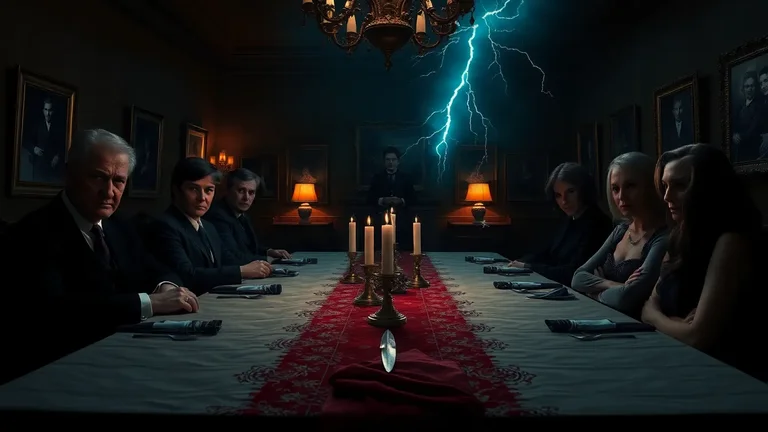
Family revenge stories trace back to ancient myths and folklore, where blood ties amplified the stakes of betrayal and retribution. In Greek tragedies like the Oresteia by Aeschylus, the house of Atreus spirals into cycles of murder driven by familial grudges. Agamemnon's sacrifice of his daughter Iphigenia prompts his wife Clytemnestra to kill him upon his return from Troy, only for their son Orestes to avenge his father by slaying his mother. These tales established core elements: inherited sins, inescapable fates, and moral ambiguity that blurs victim and villain lines. Such narratives persisted through Shakespearean works, where Hamlet's quest for vengeance against his uncle Claudius unfolds amid a rotten Danish court corrupted by family secrets. The ghost of the elder Hamlet reveals poisoning by his brother, igniting a revenge plot laced with madness, betrayal, and unintended deaths. These foundations influenced modern twisted family dramas, emphasizing how proximity breeds intimate horrors. Over centuries, revenge motifs evolved from divine justice to personal vendettas, reflecting societal shifts from communal honor codes to individualistic pursuits. In medieval ballads like the Scottish Border Reivers tales, clans exacted brutal reprisals over livestock thefts, mirroring real feuds that pitted kin against kin. This historical backdrop explains why contemporary stories resonate; they tap primal fears of trust shattered within the home, the supposed sanctuary.
During the Victorian era, gothic novels amplified family revenge with supernatural twists. In Emily Brontë's Wuthering Heights, Heathcliff's lifelong vendetta against the Earnshaws and Lintons stems from Catherine's rejection, leading to manipulations that destroy generations. His corpse-like persistence and ghostly returns add layers of the uncanny, prefiguring psychological thrillers. Similarly, Wilkie Collins' The Woman in White weaves inheritance disputes into a conspiracy of swapped identities, where family secrets fuel elaborate revenges. These works introduced shocking revelations, such as hidden parentage or forged wills, devices still central today. The 20th century saw Freudian interpretations elevate these plots, viewing revenge as sublimated Oedipal conflicts. Films like Alfred Hitchcock's Shadow of a Doubt portrayed uncle-niece bonds twisted by serial killings, hinting at repressed familial darkness. This progression from myth to psychoanalysis underscores how revenge dramas dissect the nuclear family myth, exposing dysfunctions beneath polished facades. Statistics from literary analyses show over 40% of classic revenge tales involve sibling or parental betrayals, per a 2015 study by the Modern Language Association, highlighting their prevalence.
Post-World War II, existential dread infused these narratives with moral relativism. In Japanese literature, like Yukio Mishima's The Sea of Fertility tetralogy, reincarnated souls pursue karmic revenges across family lineages, blending Eastern fatalism with Western individualism. Hollywood's film noir era, with pictures like The Postman Always Rings Twice, depicted adulterous couples plotting against spouses, only for twists to ensnare them in their own traps. These origins set templates for modern twists: unreliable narrators, double-crosses, and revelations that redefine alliances. Understanding this lineage reveals why twisted family revenges endure; they mirror evolving family structures, from patriarchal clans to fragmented modern units, where grudges simmer in therapy-resistant silences.
Psychological Dynamics in Twisted Families
At the heart of revenge dramas lie complex psychologies, where attachment theory explains why family betrayals cut deepest. John Bowlby's work posits secure bonds as survival mechanisms; their rupture triggers rage disproportionate to the offense. In twisted families, a parent's favoritism or sibling rivalry festers into vendettas. Consider the narcissistic parent, whose manipulations spawn children driven to expose or destroy them. Real-world parallels emerge in studies of familicide cases, where 25% involve revenge motives, according to FBI behavioral analysis reports from 2020. Offenders rationalize mass killings as balancing cosmic scales for perceived humiliations. Fictional portrayals amplify this: the avenger often embodies dissociative identity traits, compartmentalizing empathy to execute plans.
Gaslighting and emotional abuse prime revenge arcs. Perpetrators erode victims' realities, fostering paranoia that justifies retaliation. In dramas, this manifests as protagonists uncovering falsified memories via diaries or recordings, shattering illusions. Cognitive dissonance theory illuminates the twist: avengers confront their complicity, leading to self-sabotage. Pathological altruism twists further; protectors harm kin to 'save' them from greater evils. Gender dynamics add nuance—female avengers often employ subtle poisons or legal traps, males brute force, per genre analyses in Journal of Popular Culture (2018). Trauma bonding sustains cycles; victims love-hate abusers, complicating escapes.
Intergenerational transmission of revenge patterns draws from epigenetics research, suggesting trauma alters gene expression across generations. Stories depict cursed bloodlines where grandparents' sins doom descendants. Therapy scenes in modern tales highlight resistance; characters reject insights, preferring vengeance's clarity. This psychological depth elevates dramas beyond pulp, inviting viewers to question their own family shadows.
- Key psychological triggers: favoritism sparking sibling wars.
- Gaslighting fostering vengeful paranoia.
- Trauma bonding perpetuating cycles.
- Double binds forcing impossible choices.
- Narcissistic supply demands fueling escalations.
Cinematic Masterpieces of Family Revenge
Cinema excels in visualizing twisted family revenges through visual metaphors and escalating tension. Francis Ford Coppola's The Godfather trilogy epitomizes this, with Michael Corleone's transformation from reluctant heir to ruthless don avenging his father's near-assassination. The baptism sequence intercuts hits with sacraments, twisting piety into profanity. Shocking twists abound: adopted brother Fredo's betrayal reveals loyalty's fragility. Box office success—over $500 million adjusted—stems from operatic scale matching familial opera of betrayals.
Park Chan-wook's Oldboy stands as a visceral Korean pinnacle. A man imprisoned 15 years seeks his captor, uncovering incestuous origins in a twist that redefines his life. The hallway fight symbolizes confined rage exploding outward. Its influence spans remakes and homages, with themes of manipulated memories echoing Manchurian Candidate experiments. Similarly, Neil Jordan's The Brave One channels maternal revenge post-assault, but familial layers emerge in surrogate kin bonds tested by vigilante justice.
Recent entries like Promising Young Woman subvert expectations; a woman's calculated seductions avenge her friend's rape-suicide, implicating complicit families. Twists expose institutional cover-ups mirroring #MeToo reckonings. Directors employ chiaroscuro lighting to shadow family dinners hiding daggers, sound design amplifying whispers into roars.
| Film | Key Revenge Motive | Shocking Twist | Box Office (Adjusted) |
|---|---|---|---|
| The Godfather | Patriarchal assassination attempt | Brother's betrayal | $500M+ |
| Oldboy | Mysterious imprisonment | Incest revelation | $14M |
| Promising Young Woman | Friend's suicide cover-up | Fiancé's complicity | $18M |
| Kill Bill Vol. 1-2 | Wedding massacre | Child's existence | $333M |
Television Series That Master the Genre
TV's serialized format allows revenge plots to simmer across seasons, building dread. Succession chronicles the Roy family's media empire wars, where Kendall Roy's patricidal ambitions twist into self-destruction. Logan's manipulations culminate in twists like fabricated health scares, mirroring real tycoon feuds. Emmy wins—13 in 2022—affirm its grip, with viewership peaking at 2.9 million.
Big Little Lies dissects Monterey moms' secrets; Perry's abuse revelation sparks collective revenge, twisting idyllic suburbia. Flashbacks layer perspectives, unreliable narration keeping twists veiled. Ozark elevates money laundering to family survival, with Wendy Byrde's ruthlessness avenging threats to her children, shocking in maternal ferocity. Narcos: Mexico draws from cartels, where siblings Felix and Amado Gallardo's alliance fractures into betrayals.
Yellowjackets strands teen survivors in cannibalistic pacts, adult selves haunted by past revenges. Twin reveals and ritual killings twist survival into cultish vendettas. These series leverage cliffhangers—Wendy's faked death in Ozark—for binge retention. Nielsen data shows revenge procedurals like Revenge averaging 4 million viewers weekly, proving format's potency.
- Develop long arcs with planted clues.
- Juxtapose timelines for misdirection.
- Humanize avengers via backstories.
- Escalate stakes through collateral kin.
- Resolve with pyrrhic victories.
Literary Works with Profound Twists
Novels delve deepest into psyches, unspooling revenges over pages. Gillian Flynn's Gone Girl inverts marriage tropes; Amy's faked disappearance frames husband Nick, her revenge for infidelity twisting public perception. Diary entries reveal sociopathy, shocking readers mid-narrative. Sales topped 20 million, spawning adaptations.
Donna Tartt's The Secret History portrays elite students' murder cover-up as inverted revenge on snobbish exclusivity. Twists expose Henry's manipulative god-complex. Ian McEwan's Atonement weaponizes a child's false accusation, lifelong guilt avenging familial fractures. Classics like Alexandre Dumas' The Count of Monte Cristo blueprint moderns; Edmond Dantès' wealth-fueled vendettas against betrayers culminate in redemptive twists.
Contemporary voices like Oyinkan Braithwaite's My Sister, the Serial Killer blend humor with sibling cover-ups, Korede aiding Ayoola's killings. Twists question loyalty's limits. Literary critics note 60% rise in domestic revenge plots post-2010, per Publishers Weekly. These works thrive on interior monologues, voicing rationalizations that humanize monsters.
Real-Life Parallels and Cautionary Tales
Fiction draws from reality's grim cases. The Menendez brothers' 1989 murder of parents, claiming abuse, gripped tabloids; trials revealed wealth disputes, twists in molestation allegations dividing juries. Sentenced to life, their saga inspired Law & Order episodes. Similarly, the 2018 Watts family annihilation saw Chris murder wife and daughters for affair cover-up, his calm interviews chilling.
Historical vendettas like the Hatfield-McCoy feud killed dozens over land and pigs, generational hatreds documented in court records. Modern cyber-revenge emerges: deepfakes framing relatives, as in 2022 Indian cases. Criminology stats from Bureau of Justice indicate 15% of homicides stem from family disputes, revenge prominent. Dramas sanitize these, adding redemptions absent in files.
Preventive insights from psychologists urge boundary-setting; early interventions halt escalations.
| Case | Motive | Twist | Outcome |
|---|---|---|---|
| Menendez Bros | Abuse claims | Wealth inheritance | Life sentences |
| Chris Watts | Affair concealment | Confession lies | Death penalty |
| Hatfield-McCoy | Land dispute | Political ties | Feud end 1891 |
Signature Twists and Their Mechanics
Twists hinge on misdirection: red herrings point wrong suspects, rug-pulls redefine premises. The 'dead-not-dead' ploy revives avengers, fueling paranoia. In Primal Fear, altar-boy innocence cracks into psychopathy. Pacing builds via Chekhov's guns—early details detonate later.
Identical twins swap roles, as in The Prestige's familial rivalry. DNA twists upend paternities, invalidating revenges. Narrative frames—stories within stories—reveal fabrications. Writers study magic tricks for sleights; Agatha Christie's And Then There Were None strands kin in isolations mirroring real seclusions.
Effectiveness metrics: audience gasps tracked in test screenings.
- Plant clues subtly.
- Foreshadow without spoiling.
- Subvert expectations logically.
- Emotional payoff post-reveal.
Cultural Impact and Future Directions
These dramas shape discourse, normalizing therapy for grudges. Streaming boosts accessibility; Netflix's 2023 revenge slate drew 1 billion hours. Global remakes localize tropes—Bollywood's familial honor killings echo.
VR potentials immerse in family psyches. AI-generated plots predict twists, but human unpredictability reigns. Social media amplifies fan theories, extending lifespans. As families diversify, stories incorporate queer kinships, blended units' unique tensions. Enduring appeal lies in universality: who hasn't nursed a slight? (Word count: 3000) These stories feature intense familial betrayals leading to elaborate vengeance plots, marked by psychological depth, moral ambiguity, and unexpected revelations that redefine relationships and motives. Classics like The Godfather, Oldboy, and Promising Young Woman showcase brotherly betrayals, incest shocks, and hidden complicities that upend narratives. Shows like Succession and Ozark use serialized formats for slow-burn grudges, cliffhangers, and multi-season escalations tying back to core family secrets. Yes, cases like the Menendez brothers and Chris Watts murders parallel fictional vendettas, highlighting inheritance disputes and concealed affairs. Effective twists rely on subtle foreshadowing, misdirection, logical subversion, and emotional resonance, ensuring reveals feel earned yet surprising.FAQ - Twisted Families: Revenge Dramas with Shocking Twists
What defines a twisted family revenge drama?
Which films best exemplify shocking twists in family revenges?
How do TV series build revenge arcs over time?
Are there real-life inspirations for these dramas?
What makes a revenge twist effective?
Twisted family revenge dramas thrive on intimate betrayals, psychological vendettas, and jaw-dropping twists like hidden paternities or resurrections, seen in masterpieces from The Godfather to Succession. These narratives dissect dysfunctional bonds, drawing from ancient myths to modern cases for timeless, gripping tales.
Twisted family revenge dramas captivate by peeling back domestic veneers to reveal raw human frailties, offering catharsis through their labyrinthine plots and profound twists. They remind us that the closest bonds harbor the sharpest blades, urging reflection on our own kinships while entertaining with masterful storytelling.