The Roots of Resistance in Occupied Europe
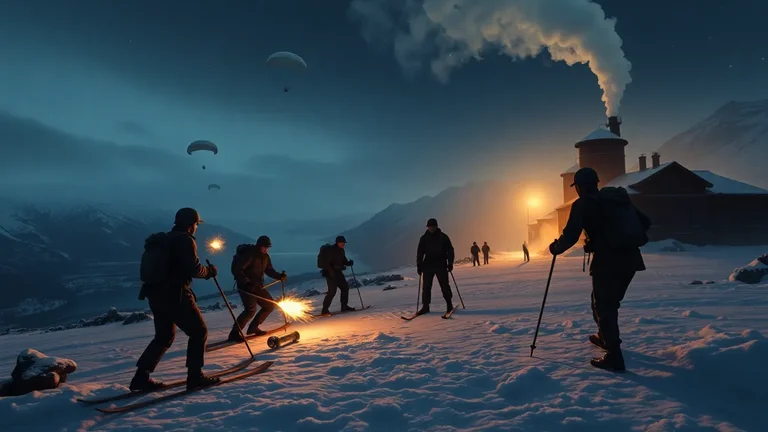
Resistance movements during World War II emerged from the shadows of occupation, where ordinary citizens transformed into covert operatives against Nazi forces. In France, the initial sparks ignited after the 1940 armistice, as small groups printed underground newspapers like Combat and Libération to counter German propaganda. These publications reached thousands, fostering a sense of defiance. By 1941, coordination improved through the British Special Operations Executive (SOE), which parachuted agents and supplies into remote fields. Norwegian saboteurs targeted heavy water plants at Vemork, disrupting Hitler's atomic ambitions. Detailed accounts reveal how locals used skis and homemade explosives in winter raids, evading Gestapo patrols through fjords and forests. Polish Home Army units formed even earlier, in 1939, organizing intelligence networks that fed crucial data to Allies about German troop movements. These roots laid groundwork for larger sagas, blending espionage with guerrilla tactics. Resistance tales often highlight personal sacrifices; families hid Jews in attics while fighters memorized codes for radio transmissions. Survival depended on secure couriers cycling through checkpoints with false papers. Economic sabotage, like derailing trains carrying munitions, became routine, with each operation planned over weeks in hidden basements.
Expansion of these networks involved women in key roles, sewing hidden pockets into coats for smuggling weapons. In Denmark, fishermen ferried Jews to Sweden under cover of night, saving over 7,000 lives in 1943's dramatic exodus. Dutch resistance focused on forging documents, with forgers like Wally van Hall financing operations through counterfeit currency. These foundational efforts built resilience, turning isolated acts into coordinated sagas that inspired later masterpieces in film and literature. Historians note that by 1943, resistance cells numbered over 100,000 across Europe, each with unique codes and signals, such as chalk marks on walls indicating safe houses.
Iconic Figures Shaping Resistance Narratives
Key individuals elevated resistance tales into epic sagas. Violette Szabo, an SOE agent in France, executed daring missions before her capture and execution at Ravensbrück. Her story, captured in biographies, details parachute drops into enemy territory, linking with Maquis fighters for ambushes. In Yugoslavia, Josip Broz Tito led partisan forces numbering 800,000 by war's end, outmaneuvering German divisions in mountainous strongholds. His saga includes the 1943 battle of Neretva, where forces crossed rivers under fire to evade encirclement. Norwegian leader Max Manus specialized in ship sabotage, attaching limpet mines underwater in Oslo harbor, sinking supply vessels critical to the Atlantic Wall. Polish courier Jan Nowak-Jeziorański bicycled 2,000 miles to London, delivering intelligence that shaped D-Day planning. These figures embodied saga elements—betrayal risks, narrow escapes, and moral dilemmas. Dutch rescuer Corrie ten Boom hid dozens in her watch shop's secret room, her faith-driven narrative later chronicled in The Hiding Place. Belgian saboteur Freddy de Jonghe coordinated factory strikes, halting tank production. Their personal letters and diaries provide raw insights, revealing fears of torture and hopes for liberation.
Women like Noor Inayat Khan operated radios under aliases, transmitting for months despite detection risks. Khan's capture in 1943 stemmed from a collaborator's betrayal, yet her defiance in prison inspired postwar tributes. Greek resistance fighter Moschoutis disrupted supply lines in Crete, using caves for bases. These portraits humanize sagas, showing how charisma and ingenuity turned civilians into legends. Statistics from declassified files indicate over 400 SOE agents deployed, with 50% casualty rates underscoring the stakes.
Signature Operations That Defined the War
Telemark's heavy water sabotage in 1943 stands as a pinnacle operation. Norwegian commandos scaled 1,800-meter plateaus, planting explosives at Vemork hydroelectric plant, destroying 500 kilograms of deuterium oxide. This halted German nuclear research, as confirmed by postwar interrogations. French Maquis' Vercors plateau uprising in 1944 involved 4,000 fighters holding against 10,000 Germans, though ultimately tragic, it pinned down divisions pre-Normandy. Polish AK's Warsaw Uprising in 1944 aimed to liberate the city, with fighters seizing bridges and tram depots in street battles lasting 63 days. Over 200,000 civilians died, but the saga of sewer escapes and homemade grenades endures. Dutch February Strike of 1941 protested Jewish deportations, halting Amsterdam transport for days. Belgian Operation Nuwa in 1944 destroyed rail bridges, delaying Ardennes counteroffensive. Yugoslav Bleiburg repatriations highlight partisan complexities, forcing Axis collaborators into Allied hands.
Smaller ops like Operation Mincemeat deceived Germans with a corpse carrying fake invasion plans, indirectly aiding resistance intel. Italian CLN coordinated 1945 northern uprising, seizing Milan before Allies arrived. These missions required precision: scouts mapping patrols, timers on bombs, and extraction via Lysander planes landing on fields. Casualty lists reveal heavy tolls—Telemark lost four men to cliff falls alone.
| Operation | Location | Key Target | Outcome | Casualties |
|---|---|---|---|---|
| Telemark | Norway | Heavy Water Plant | Success - Production Halted | 4 Commandos |
| Warsaw Uprising | Poland | City Control | Failure - City Destroyed | 18,000 Fighters |
| Vercors | France | Plateau Defense | Overrun | 650 Fighters |
| February Strike | Netherlands | Transport Halt | Temporary Success | Minimal |
Literary and Cinematic Masterpieces Born from Tales
Resistance sagas inspired enduring works. Alan Furst's novels like Night Soldiers weave espionage threads through Balkan nights. The Guns of Navarone film dramatizes a fictional Crete mission, mirroring real demolitions. Charlotte Gray novelizes SOE women's plights, drawing from Szabo's life. Polish Ashes and Diamonds by Andrzejewski captures AK moral ambiguities post-uprising. Norwegian The Heroes of Telemark film stars Kirk Douglas in Manus-inspired roles. Memoirs like Manus's own detail limpet mine dives. French Army of Shadows by Melville, based on Kassak's novel, portrays radio operators' isolation. Yugoslav films like Force celebrate Tito's partisans. These masterpieces preserve tactics: codebooks memorized, dead drops in parks. Literary devices amplify tension—flashbacks to training, internal monologues on betrayal fears.
Documentaries like The Sorrow and the Pity blend interviews with footage, revealing collaboration nuances. Graphic novels such as Maus indirectly echo resistance hiding themes. Adaptations often fictionalize for drama, yet core events ring true, educating generations on costs of freedom.
- Key literary tactics depicted: Cipher wheels for Enigma cracks.
- Radio silence protocols to evade triangulation.
- Courier chains spanning countries.
- Sabotage blueprints smuggled in loaves.
- Maquis supply drops signaled by bonfires.
French Maquis: Guerrilla Warfare Exemplars
The Maquis, rural French bands, grew from deserters evading Vichy labor drafts. By 1944, 100,000 strong, they ambushed convoys on D-Day eve, destroying 2,000 vehicles. Zones like Corrèze featured arms caches in barns. Leaders like Gaspard orchestrated mill attacks, flooding German fuel dumps. Women couriers like Andrée de Jongh ran the Comet Line, escorting 800 Allied airmen to Spain over Pyrenees. Gestapo raids prompted reprisals, yet morale held via BBC broadcasts. Detailed maps from archives show ambush sites along wooded roads. Post-liberation, Maquis policed collaborators, transitioning to Free French forces.
Training emphasized Sten guns disassembly blindfolded, plastique handling. Nutrition came from foraged berries, black market trades. Saga depth lies in interpersonal dynamics—rivalries between communist and Gaullist factions. Statistics: Maquis inflicted 35,000 German casualties by war's end.
Norwegian and Scandinavian Sabotage Sagas
Norway's Milorg coordinated 40,000 saboteurs, focusing on shipping and aluminum. Oslo Gang struck 30 vessels, using canoes for approaches. Danish sabotage hit 1,000 targets, including Copenhagen-Göteborg ferry. Swedish neutrality aided via intelligence relays. Finnish Winter War tactics influenced, with ski troops in Lapland. Vemork's second raid flooded the valley, forcing evacuation. Manus's hospital escape post-injury exemplifies grit. Radio operators endured Arctic nights transmitting. These northern sagas emphasize harsh climates—blizzards masking movements, auroras confusing spotters.
Postwar trials exposed collaborators like Quisling, whose name became betrayal synonym. Legacy includes modern fjord museums preserving artifacts.
Eastern Front Resistance: Polish and Yugoslav Epics
Poland's AK executed Operation Tempest, rising in Vilnius and Lwów pre-Red Army. Cipher bureau cracked Enigma early, sharing with Bletchley. Warsaw Ghetto Uprising's 1943 saga saw Jewish fighters hold for weeks with Molotovs. Yugoslav partisans controlled 60% territory by 1945, with 1.7 million tons Allied aid airlifted. Tito's Supreme HQ moved via pony trains. Bleiburg massacre aftermath complicated narratives. Ukrainian UPA fought both Nazis and Soviets, in forested Carpathians.
Armaments included captured StG 44s, bazookas. Medical networks treated wounded in monasteries. These epics highlight multi-front wars, with AK smuggling microfilms in matchboxes.
| Group | Peak Strength | Primary Tactics | Allied Aid (Tons) |
|---|---|---|---|
| French Maquis | 100,000 | Ambushes | 15,000 |
| Polish AK | 380,000 | Uprisings | 500 |
| Yugoslav Partisans | 800,000 | Partisan Bases | 1,700,000 |
| Norwegian Milorg | 40,000 | Sabotage | 200 |
Western Resistance: Dutch, Belgian, and Italian Efforts
Dutch LO gathered 60,000 in intel nets, warning of V-2 launches. Ijsselmui resistance printed stamps funding ops. Belgian Armée Secrète blew 200 bridges. Italy's 1943 armistice spurred CLN, with Garibaldi Brigades harassing garrisons. Rome's Via Rasella attack killed 32 SS, prompting Ardeatine Caves massacre. These efforts tied down 20 divisions. Forgery labs produced 200,000 IDs. Escape lines like Pat O'Leary routed evaders through Marseille consulates.
Children acted as lookouts, signaling via bicycle bells. Postwar, monuments honor executed leaders.
Intelligence and Communication Networks
Resistance thrived on radios like Eureka beacons guiding bombers. One-time pads ensured secure messages. Couriers memorized texts, swallowing if caught. SOE's F Section ran 400 agents, with pick-up ops extracting VIPs. Polish Sikorski Institute archived 100,000 documents. Greek EDES coded via poems. Failures, like Prosper network's 1943 bust, cost 35 lives to a double agent. Successes included Oslo Report detailing V-weapons.
- Assemble crystal sets from scavenged parts.
- Test frequencies nightly for BBC pips.
- Transmit in five-letter groups.
- Destroy sets post-use with thermite.
- Relay via bicycle to next station.
Legacy and Modern Interpretations in Sagas
Resistance tales influence strategy texts, video games like Medal of Honor. Museums in Yad Vashem preserve artifacts. Debates persist on uprisings' timings, Soviet non-aid. Films like Defiance portray Bielski partisans saving 1,200 Jews. Novels explore psyches—guilt over civilian deaths. Annual commemorations in Warsaw draw thousands. These sagas remind of civilian power against tyranny, with declassified files continually revealing layers.
Global echoes in Afghan mujahideen, Syrian rebels. Educational curricula integrate, fostering civic duty. Art installations recreate drops, immersing visitors. Oral histories from survivors add authenticity, transcribed in archives. The Heavy Water Sabotage at Vemork in 1943, where commandos destroyed vital deuterium oxide stocks, crippling Nazi atomic research. Leaders like Gaspard and women couriers such as Andrée de Jongh, who ran escape lines for Allied airmen across the Pyrenees. The Home Army cracked Enigma codes early and couriered vital reports on German movements, aiding D-Day and V-weapon warnings. Novels like Alan Furst's Night Soldiers and films such as The Guns of Navarone dramatized real events, keeping sagas alive for generations. Under Tito, they grew to 800,000 fighters, controlling vast territories and receiving massive Allied airlifts.FAQ - WWII Resistance Tales in Saga Masterpieces
What was the most famous Norwegian resistance operation?
Who were key figures in French Maquis resistance?
How did Polish resistance contribute to Allied intelligence?
What role did literature play in preserving these tales?
What was the scale of Yugoslav partisan forces?
WWII resistance tales in saga masterpieces highlight epic operations like Norway's Vemork sabotage and French Maquis ambushes, featuring heroes such as Max Manus and Violette Szabo. These narratives, preserved in literature and film, detail guerrilla tactics, intelligence feats, and sacrifices that aided Allied victory across Europe.
These WWII resistance tales, woven into saga masterpieces, stand as testaments to human endurance and ingenuity against oppression, their echoes shaping our understanding of courage in history's darkest hours.